

Your sump pump is your basement’s first line of defense against flooding. But what happens when a powerful spring storm knocks out your electricity, exactly when your pump is needed most? That is the scenario every homeowner in South Dakota, Wyoming, and Nebraska should prepare for, and it is exactly why a battery backup sump pump is not a luxury; it is a necessity.
Schedule your free inspection today.
In this guide, we will explain how battery backup sump pumps work, why they are especially important in the Northern Plains, and how to choose the right system for your home. Whether you are upgrading an existing setup or planning a complete basement waterproofing system, understanding your backup options is the first step toward protecting your property.
Key Takeaways
- A battery backup sump pump automatically activates during power outages, keeping your basement dry when your primary pump cannot run.
- Spring snowmelt and severe storms make battery backup critical for homeowners across South Dakota, Wyoming, and Nebraska.
- Multi-pump systems like the TripleSafe™ provide the most comprehensive protection, combining a primary pump, secondary pump, and battery-operated backup in a single unit.
- Professional installation ensures proper float switch placement, discharge line configuration, and system testing for reliable long-term performance.
What Is a Battery Backup Sump Pump?
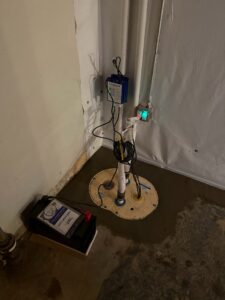
A battery backup sump pump is a secondary pump that operates on battery power, designed to activate automatically when your primary sump pump fails or loses power. It sits alongside your main pump in the sump pit and uses its own float switch to detect rising water levels.
When conditions are normal, the battery stays charged and the backup pump remains on standby. If your primary pump stops working, whether from a power outage, a tripped breaker, or a mechanical failure, the backup pump kicks in and begins removing water from your basement. An audible alarm typically sounds to alert you that the backup system has engaged.
Think of it as an insurance policy for your basement. Your primary pump handles the day-to-day work, while the battery backup is there for the moments when things go wrong.
How Does a Battery Backup Sump Pump Work?
A battery backup sump pump works by using a rechargeable battery to power a secondary DC pump that activates automatically when your primary sump pump fails or loses power. Blackburn Foundation Repair installs battery backup systems that monitor water levels continuously and engage within seconds of detecting a problem, keeping your basement dry through extended power outages and severe storms across South Dakota, Wyoming, and Nebraska.
- Water enters the sump pit through your home’s perimeter drainage system, such as the patented WaterGuard drainage system.
- The primary pump activates first. Its float switch triggers when water reaches a set level, and the pump removes the water through the discharge line.
- If the primary pump fails, water continues to rise in the pit.
- The backup pump’s float switch triggers at a slightly higher water level, activating the battery-powered pump.
- The backup pump removes water through its own discharge line until the water level drops and the float switch disengages.
- An alarm sounds to notify you that the backup system has been activated, so you can investigate the primary pump issue.
The battery is connected to a charger that keeps it at full capacity whenever household power is available. When the power goes out, the battery provides the energy needed to run the pump. The UltraSump® battery backup system from Blackburn Foundation Repair, for example, can pump up to 11,500 gallons on a single charge, providing hours of continuous protection during extended outages.
Why Battery Backup Matters in South Dakota, Wyoming & Nebraska
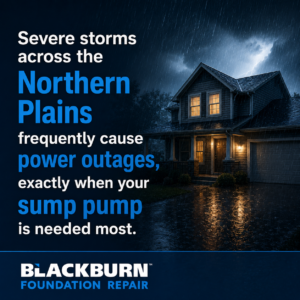
Battery backup sump pumps are especially critical for homeowners in South Dakota, Wyoming, and Nebraska because the Northern Plains experience severe spring snowmelt, frequent storm-driven power outages, and persistently high water tables in clay-rich soils. Blackburn Foundation Repair has protected homes across this tri-state region for over 30 years, and our experience confirms that a battery backup is not optional here; it is essential protection against the unique flooding risks of the Great Plains.
Spring Snowmelt and Rapid Thaw Cycles
South Dakota, Wyoming, and Nebraska experience some of the most dramatic spring thaw events in the country. After months of heavy snowpack, warming temperatures can release massive volumes of water in a short period. This rapid snowmelt saturates the soil around your foundation, and that water has to go somewhere. Without a functioning sump pump, it goes into your basement.
The challenge is compounded by freeze-thaw cycles. As temperatures swing above and below freezing through March, April, and May, the ground alternates between frozen and saturated. Each thaw cycle pushes more water toward your foundation walls. Your sump pump may run almost continuously during peak snowmelt, and a power outage during this critical window can lead to significant flooding within hours.
Severe Storms and Power Outages
The Northern Plains are well known for severe weather. From powerful thunderstorms and heavy rainfall to blizzards and ice storms, the region experiences conditions that frequently knock out electrical service. According to the U.S. Department of Energy, rural areas in the Great Plains are among the most susceptible to extended power outages due to the distances between power distribution points.
Here is the problem: the exact storms that threaten to flood your basement are the same storms most likely to cut your power. A standard sump pump that relies entirely on household electricity becomes useless at the worst possible moment. A battery backup ensures your basement stays protected regardless of what is happening with the power grid.
High Water Tables and Clay Soils
Much of eastern South Dakota and parts of Wyoming and Nebraska sit on heavy clay soils with naturally high water tables. Clay soil does not absorb water well; instead, it directs moisture laterally toward your foundation. When combined with snowmelt or heavy rain, the hydrostatic pressure against your basement walls and floor increases significantly.
In these conditions, a sump pump is not just helpful; it is essential. And because the water pressure can be relentless during wet seasons, having a backup system ensures continuous protection even if your primary pump is overwhelmed or loses power.
Ready to protect your basement? Call 1-800-392-3389 or contact us online for a free inspection.
Blackburn’s Sump Pump Systems: TripleSafe vs. SuperSump vs. UltraSump
Choosing the right sump pump system depends on your home’s specific needs, your risk level, and how much protection you want. Blackburn Foundation Repair offers three primary systems, each engineered for a different level of defense.
TripleSafe™ Sump Pump System: Maximum Protection
The TripleSafe™ system is the most comprehensive sump pump solution available. It combines three pumps in a single unit:
- Primary Pump: A powerful Zoeller cast-iron pump handles standard water removal under normal conditions. Cast-iron construction dissipates heat more effectively than plastic pumps, extending the pump’s lifespan significantly.
- Secondary Pump: A second Zoeller cast-iron pump activates if the primary pump fails or is overwhelmed during heavy water flow. This provides redundancy that single-pump systems simply cannot match.
- Battery-Operated Backup Pump: The third pump runs on battery power and engages during power outages. This ensures your basement stays dry even when the electricity is out.
The TripleSafe also includes the SuperLiner® sump liner, which features an airtight lid that prevents pests and debris from entering the sump pit while collecting water efficiently through its perforated design.
Best for: Homeowners in high-risk flood areas, properties with high water tables, homes that have experienced previous basement flooding, and anyone who wants the highest level of protection available.
SuperSump® Premier Sump Pump System: Reliable Primary Protection
The SuperSump® system is an excellent primary pump that delivers premium performance through high-quality components:
- Zoeller 1/3 HP Cast-Iron Pump that pumps up to 2,280 gallons per hour
- SuperLiner® sump liner with perforations and airtight lid
- WaterWatch® Alarm that alerts you when water levels rise above the intake
- CleanPump® Stand (patented) that elevates the pump intake to prevent clogs, one of the most common causes of pump failure
- Improved Float Valve with linear-motion design for reliable long-term performance
- Check Valve that prevents backflow into the sump pit
- One-Way Floor Drain in the lid that directs plumbing leaks into the system
The SuperSump is a standalone primary pump and does not include a built-in battery backup. However, it can be paired with the UltraSump® battery backup system for added protection.
Best for: Homeowners who want a high-quality primary pump and plan to add battery backup separately, or homes with lower flood risk where a single reliable pump may be sufficient.
UltraSump® Battery Backup System: Dedicated Backup Power
The UltraSump® system is a dedicated battery backup designed to work alongside any primary sump pump:
- Pumps up to 11,500 gallons on a single battery charge, enough for extended outages lasting several hours
- Durable extruded aluminum case for long-lasting performance
- Battery-powered emergency LED light for visibility during power outages
- Illuminated plug end for easy connection
- Simple plug-in cable connections for straightforward setup
- Re-settable pump fuse for added protection
The UltraSump automatically activates when it detects that the primary pump has failed or the water level has risen above normal. It can be installed as a standalone backup or as part of the TripleSafe system.
Best for: Homeowners who already have a quality primary pump (like the SuperSump) and want to add battery backup protection, or anyone upgrading an existing sump pump setup.
Smart Monitoring with TimeMachine
The UltraSump system can be enhanced with the TimeMachine Data Logger, a Bluetooth-enabled module installed on your basement wall. It monitors and records up to 10 years of data, including:
- Pump activation cycles
- Battery charge status
- Humidity levels
- Temperature readings
You can access this data anytime through a mobile app, giving you real-time insight into how your sump pump system is performing. For even more comprehensive monitoring, Blackburn also offers the ShipShape Home Monitoring System that provides 24/7 professional monitoring of your sump pump, dehumidifier, and other critical home systems.
Quick Comparison
| Feature | TripleSafe™ | SuperSump® | UltraSump® |
|---|---|---|---|
| Type | Complete 3-pump system | Primary pump | Battery backup |
| Number of Pumps | 3 (primary + secondary + battery backup) | 1 | 1 |
| Battery Backup Included | Yes (built-in) | No (add UltraSump separately) | Yes (this IS the backup) |
| Pump Material | Zoeller cast-iron | Zoeller 1/3 HP cast-iron | Battery-powered DC pump |
| SuperLiner® Included | Yes | Yes | No (uses existing liner) |
| WaterWatch® Alarm | Yes | Yes | Audible alarm included |
| Battery Capacity | Standard backup battery | N/A | Up to 11,500 gallons per charge |
| TimeMachine Compatible | Yes | No | Yes |
| Best For | Maximum protection | Reliable primary pump | Adding backup to existing setup |
Signs You Need a Battery Backup Sump Pump
Not sure whether your current setup needs a battery backup? Here are the warning signs that indicate it is time to upgrade:
- You have experienced power outages during storms. Even one outage during heavy rain is enough reason to add backup protection. If it has happened before, it will happen again.
- Your primary pump runs frequently. A pump that cycles often is working hard and is more susceptible to mechanical failure. A backup gives you a safety net.
- You have noticed signs of water in your basement. Water stains, musty odors, or efflorescence (white mineral deposits) on basement walls suggest moisture intrusion that a failing pump could worsen.
- Your sump pump is more than 7-10 years old. Pumps do not last forever. An aging primary pump paired with no backup is a recipe for flooding.
- You live in an area with a high water table or clay soil. Homes in eastern South Dakota and parts of Wyoming and Nebraska face persistent groundwater pressure that demands reliable pumping.
- Your home has finished basement space. The more you have invested in your basement, the more you have to lose from a flood. Carpet, drywall, furniture, electronics. All of it can be destroyed by even a few inches of standing water.
When to Replace Your Sump Pump Battery
A battery backup is only as reliable as its battery. Over time, all batteries lose their ability to hold a charge, which means your backup system may not perform when you need it most. Here are the guidelines for battery maintenance and replacement:
- Replace the battery every 3-5 years, even if it appears to be functioning normally. Battery capacity degrades gradually, and you do not want to discover a weak battery during an emergency.
- Test your backup system monthly by unplugging your primary pump and allowing the water level to rise until the backup engages. This confirms the system is working properly.
- Monitor battery health through your system’s control panel or, if equipped, the TimeMachine data logger. Low battery warnings should be addressed immediately.
- Replace immediately if the alarm indicates a battery issue. Do not postpone battery replacement; the next storm could be the one that tests your system.
- Inspect battery connections seasonally. Loose or corroded terminals can prevent the backup pump from activating. Clean connections ensure reliable power delivery.
Pro tip: Schedule your battery replacement before spring, the season when your sump pump works hardest. Having a fresh battery heading into snowmelt season gives you the best protection during the highest-risk months.
Why Professional Installation Matters
While some homeowners consider installing a battery backup sump pump as a DIY project, professional installation provides significant advantages that protect your investment and your home.
Proper System Sizing
A professional evaluates your home’s specific conditions, including water table depth, soil type, basement size, and historical flooding patterns, to recommend the right system. An undersized pump will be overwhelmed during heavy water events, while an oversized system may short-cycle and wear out prematurely. At Blackburn Foundation Repair, our team has over 30 years of experience sizing sump pump systems for homes across South Dakota, Wyoming, and Nebraska.
Correct Float Switch Positioning
The float switch is the most critical component for reliable operation. It must be positioned at exactly the right height relative to both the primary pump’s float and the sump pit depth. If set too low, the backup pump activates unnecessarily. If set too high, water may overflow before the backup engages. Professional installation ensures precision that prevents both scenarios.
Discharge Line Configuration
The backup pump’s discharge line must be properly routed to move water away from your foundation. This includes installing check valves to prevent backflow, drilling a weep hole to prevent air locks, and ensuring the discharge exits at the correct point. Improper discharge line routing is one of the most common installation errors that leads to system failure.
Integration with Existing Systems
If you have a basement waterproofing system with perimeter drainage, the backup pump must integrate seamlessly with the existing setup. A professional ensures the backup works in concert with your WaterGuard drainage, primary pump, and discharge system as a unified whole.
Warranty Protection
Blackburn Foundation Repair provides a lifetime transferable warranty on all major sump pump installations. This warranty covers both the equipment and the workmanship, giving you long-term protection. Professional installation ensures your warranty remains valid, protecting your investment for as long as you own your home and adding value if you ever decide to sell.
Frequently Asked Questions
How long does a battery backup sump pump last during a power outage?
Battery runtime depends on the system and how much water is entering your sump pit. The UltraSump® battery backup can pump up to 11,500 gallons on a single charge, which typically provides several hours of protection during moderate water flow. For extended outages, the TripleSafe™ system with its three-pump design ensures your basement stays dry longer by efficiently managing water removal across multiple pumps.
Can I add a battery backup to my existing sump pump?
Yes. The UltraSump® battery backup system is designed to be installed alongside your existing primary pump. It does not replace your current pump; it works as a secondary system that activates only when needed. A professional can evaluate your existing setup and recommend the best backup configuration for your specific situation.
How often should I replace my sump pump battery?
Plan to replace your backup battery every 3-5 years. Battery capacity declines gradually over time, and a weakened battery may not provide enough power to run the pump during an extended outage. Testing your backup system monthly and replacing the battery on schedule ensures reliable performance when you need it most.
What is the difference between a battery backup and a water-powered backup?
A battery backup uses a rechargeable battery to power a DC pump, while a water-powered backup uses your home’s municipal water pressure to create suction that removes water from the sump pit. Battery backups work regardless of your water supply and are the preferred choice for homes in South Dakota, Wyoming, and Nebraska, where well water is common and municipal water pressure may not be sufficient for water-powered systems.
Do I need a battery backup if I have a generator?
A generator is a good complement to a battery backup, but it is not a substitute. A battery backup activates instantly and automatically, within seconds of detecting a pump failure. A generator requires time to start (or manual activation if it is not automatic) and may not be running during the critical first minutes of a power outage. The best approach is to have both: a battery backup for immediate, automatic protection and a generator for extended outage support.
How do I know if my battery backup sump pump is working?
Most systems include a control panel with indicator lights and an audible alarm. The panel monitors battery charge level, pump status, and power supply. You should also test your backup manually once a month by disconnecting your primary pump and allowing the backup to activate. Systems equipped with the TimeMachine data logger or ShipShape monitoring provide continuous digital monitoring through a mobile app.
Protect Your Basement Before the Next Storm
Spring storms, snowmelt, and power outages are not a matter of if in South Dakota, Wyoming, and Nebraska. They are a matter of when. A battery backup sump pump gives you the peace of mind that your basement is protected around the clock, regardless of what Mother Nature throws your way.
At Blackburn Foundation Repair, we have been protecting homes across the region for over 30 years. Our team of certified professionals will evaluate your home, recommend the right sump pump system, and install it with the precision and care that comes with three decades of experience. Every installation is backed by our lifetime transferable warranty.
Schedule your free inspection today. Call 1-800-392-3389 or contact us online to get started.