

Your home’s foundation does one critical job: it holds everything up. When that foundation starts to fail, it sends warning signals throughout the entire structure. The tricky part is that many homeowners dismiss these signals as normal wear and tear until the damage becomes severe and expensive.
After more than 30 years of repairing foundations across South Dakota, Wyoming, and Nebraska, we’ve seen every stage of foundation failure. The homeowners who catch the early signs of foundation problems save thousands of dollars and avoid major structural damage. The ones who wait often face far more invasive and costly repairs.
Here are five warning signs every homeowner should know, what causes them, and what to do about each one.
Key Takeaways
- Foundation cracks wider than 1/4 inch, horizontal cracks, or stair-step patterns in brick indicate active structural movement and require professional evaluation.
- Sticking doors, uneven floors, and gaps around windows are often caused by foundation settlement, not just normal aging.
- South Dakota, Wyoming, and Nebraska homes face elevated foundation risk due to expansive clay soils and extreme freeze-thaw cycles.
- Early detection and repair with engineered solutions like push piers, helical piers, and GeoLock wall anchors can stabilize and even lift a settling foundation.
- A professional foundation inspection is free and the single best way to determine whether your symptoms are cosmetic or structural.
1. Cracks in Walls, Floors, or the Foundation Itself
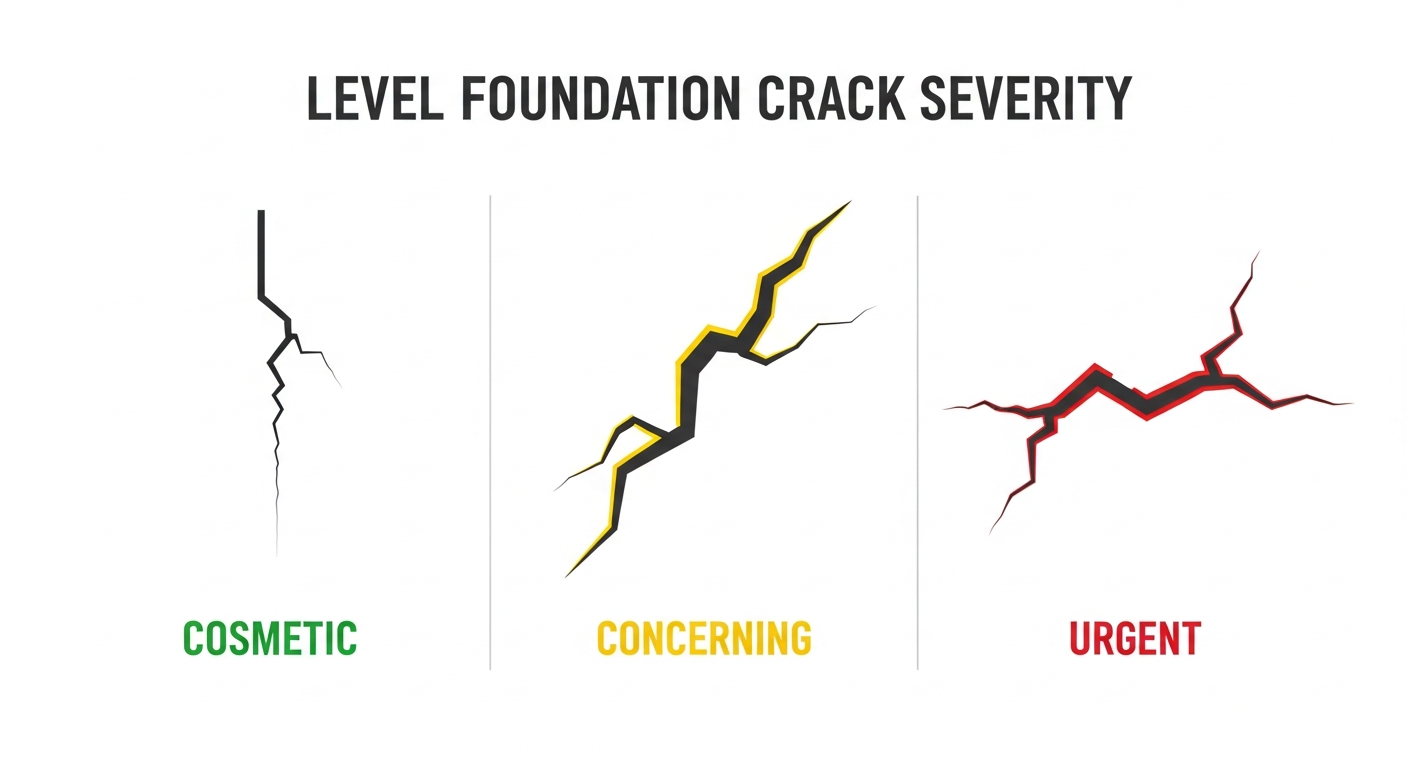
Cracks are the most visible and most common signs of foundation problems. But not every crack means your home is in danger. The key is knowing which cracks are cosmetic and which signal active structural movement.
What to Look For
Cosmetic (low concern):
– Hairline vertical cracks in drywall, especially near door frames
– Small shrinkage cracks in poured concrete (less than 1/8 inch)
Concerning (schedule an inspection):
– Diagonal cracks running from the corners of windows or doors
– Cracks wider than 1/4 inch in foundation walls or basement floors
– Cracks that grow over weeks or months
Urgent (call immediately):
– Horizontal cracks in basement walls, which indicate lateral soil pressure
– Stair-step cracks in brick or block walls
– Any crack accompanied by wall bowing or displacement
Why It Happens
In our region, the expansive clay soils common throughout South Dakota and eastern Wyoming absorb moisture and swell, then shrink during dry periods. This repeated expansion and contraction cycle puts tremendous pressure on foundation walls. Add in our extreme freeze-thaw cycles, where temperatures can swing 50+ degrees in a single week, and you have a recipe for foundation cracks.
How It’s Fixed
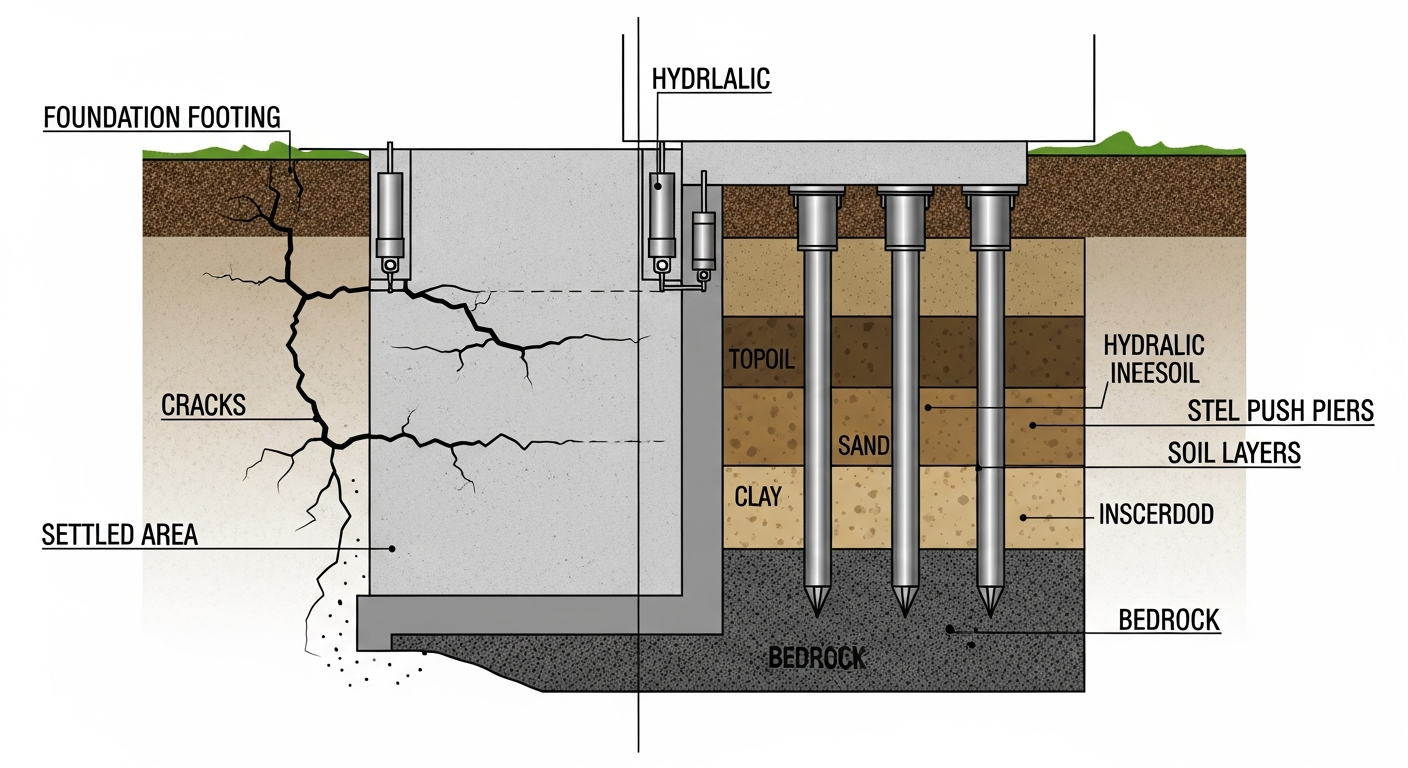
For settling foundations, push piers and helical piers are driven deep into stable bedrock beneath your home. Push piers can actually raise a settled foundation back toward its original position, closing cracks in the process. For bowing or cracking basement walls, GeoLock wall anchors use interior wall plates and earth anchors connected by steel-reinforced rods to stabilize the wall and potentially straighten it over time.
2. Doors and Windows That Stick or Won’t Close Properly
When interior doors start dragging on the floor, exterior doors won’t latch, or windows suddenly become difficult to open, most homeowners blame humidity or the age of the house. Sometimes that’s accurate. But when sticking persists regardless of weather conditions, it’s one of the clearest signs of foundation issues.
What to Look For
- Interior doors that swing open or closed on their own
- Gaps appearing at the top of door frames while the bottom is tight (or vice versa)
- Windows that jam, won’t lock, or show daylight gaps around the frame
- Door frames that are visibly out of square
Why It Happens
As the foundation settles unevenly, the entire structure above it shifts. Door and window frames, which require precise alignment to function, get pulled out of square. Even a fraction of an inch of foundation movement can make a door stick or a window bind.
This is especially common in homes built on the glacial till soils found across central and eastern South Dakota. These soils have inconsistent load-bearing capacity, meaning one section of your foundation may settle more than another.
How It’s Fixed
Helical piers are mechanically screwed into load-bearing soil strata beneath the foundation, with each pier’s capacity monitored during installation. Once stabilized, the foundation can often be lifted to restore proper alignment. This means your doors and windows can return to normal function. The process requires no heavy excavation and causes minimal disruption to your landscaping.
3. Uneven, Sloping, or Bouncy Floors
This is the sign homeowners most often dismiss, and the one they most regret ignoring. If you can feel a slope when walking across a room, notice a marble rolling on its own, or feel a “bounce” in certain areas of the floor, your foundation is trying to tell you something.
What to Look For
- A noticeable slope or tilt in any room
- Bouncy or springy floors, especially on the main level
- Gaps between the floor and baseboards
- Tile cracking in a pattern (not just a single broken tile)
- Furniture that wobbles on previously level surfaces
Why It Happens
Uneven floors result from two primary causes: foundation settlement pulling one section lower, or weakened crawl space supports failing under load. In homes with crawl spaces (common across our tri-state service area), sagging floor joists and settling support columns are a frequent culprit.
Bouncy floors specifically often indicate that crawl space beams are inadequately supported or that existing wooden or concrete columns have deteriorated.
How It’s Fixed
For foundation settlement causing uneven floors, push piers or helical piers address the root cause by transferring the home’s weight to stable soil or bedrock.
For crawl space-related floor sagging, the SmartJack Crawl Space Support System uses galvanized steel support columns capable of bearing over 60,000 pounds each. They install in less than a day and use an adjustable screw design for precise leveling. Unlike old-fashioned concrete columns that need shimming, SmartJacks provide a permanent, adjustable solution.
4. Gaps Around Windows, Doors, or Where Walls Meet the Ceiling
When you notice gaps appearing where your walls meet the ceiling, gaps around exterior door frames, or spaces opening between the chimney and the house, your foundation is experiencing significant movement. These gaps indicate that structural components are literally pulling apart.
What to Look For
- Visible gaps where interior walls meet the ceiling
- Separation between the chimney and the exterior wall
- Gaps forming around window casings or exterior door frames
- Crown molding pulling away from the wall or ceiling
- Exterior gaps where different building materials meet
Why It Happens
Foundation settlement rarely happens uniformly. One side or corner of the home may settle faster than the rest, creating differential settlement. As the foundation tilts, walls shift, and connections between structural elements are stressed beyond their capacity. Gravity takes over, and gaps appear.
In the Black Hills region and western Nebraska, homes built on varying soil compositions can experience differential settlement as different soil types compress at different rates under the home’s load.
How It’s Fixed
The combination of push piers and helical piers can address differential settlement by stabilizing the foundation at multiple points and lifting the settled sections. Because each pier is independently driven to load-bearing strata, the system can correct uneven settlement across the entire footprint of the home.
For foundation walls that are bowing inward due to soil pressure (a common cause of interior gaps), the PowerBrace System uses zinc-plated steel beams custom-fit to your basement wall height. The patented tightening design allows the wall to be gradually straightened over time, closing those interior gaps. No heavy equipment is needed, and there’s zero disturbance to your lawn and landscaping.
5. Water Intrusion in the Basement or Crawl Space
Water where it shouldn’t be is always a red flag. While not every wet basement indicates foundation damage, persistent water intrusion often signals cracks or gaps in the foundation that are allowing groundwater to enter. It can also be both a symptom and a cause: water weakens the foundation, which creates more entry points for water.
What to Look For
- Water stains or mineral deposits (white, chalky residue) on basement walls
- Standing water after rainstorms
- Musty or moldy odors in the basement or crawl space
- Efflorescence (white crystalline deposits) on concrete surfaces
- Damp or wet insulation in the crawl space
Why It Happens
South Dakota receives an average of 20-25 inches of precipitation annually, with most falling during spring snowmelt and summer storms, precisely when the ground is already saturated. Hydrostatic pressure builds against foundation walls, exploiting any crack or weakness. In homes with older foundations, deteriorating mortar joints and aging concrete create natural entry points.
How It’s Fixed
Addressing water intrusion requires solving two problems: stopping the water and repairing the structural damage. Basement waterproofing using the patented WaterGuard drainage system captures water before it reaches your living space and channels it to a TripleSafe sump pump system. For crawl spaces, the CleanSpace encapsulation system seals the space with a 20-mil, 7-layer vapor barrier.
For foundation walls that have deteriorated severely due to long-term water damage, the EverBrace Wall Restoration System uses steel corrugated panels spanning between steel I-beams, with specialized rigid foam injection to fill voids and transfer structural load. It delivers the security of a new foundation without the cost and disruption of full replacement.
When Should You Call a Professional?
Use this quick reference to decide your next step:
| What You’re Seeing | Severity | What to Do |
|---|---|---|
| Hairline cracks, minor settling | Low | Monitor every 3-6 months; photograph for reference |
| Sticking doors, diagonal cracks, slight floor slope | Moderate | Schedule a professional foundation inspection |
| Horizontal wall cracks, visible gaps, bouncy floors, water intrusion | High | Call for an inspection as soon as possible |
| Bowing walls, large cracks growing rapidly, structural separation | Urgent | Contact a foundation specialist immediately |
Foundation problems never fix themselves. They only get worse over time. The sooner you address the issue, the simpler and more affordable the repair.
Protect Your Home with a Free Foundation Inspection
At Blackburn Foundation Repair, we’ve been solving foundation problems across South Dakota, Wyoming, and Nebraska since 1992. Our team has repaired thousands of foundations using engineered, patented solutions backed by lifetime transferable warranties.
If you’ve noticed any of the warning signs above, don’t wait for them to get worse. Schedule your free inspection today. We’ll diagnose the problem, explain your options, and provide a no-obligation estimate.
Call 1-800-392-3389 or contact us online to get started.
Frequently Asked Questions
What are the most common signs of foundation problems?
The most common signs include cracks in walls or the foundation itself, doors and windows that stick or won’t close properly, uneven or bouncy floors, gaps between walls and ceilings, and water intrusion in the basement or crawl space. Any of these symptoms warrant a closer look, especially if multiple signs appear together.
Are hairline cracks in my foundation something to worry about?
Hairline vertical cracks in poured concrete are usually caused by normal curing and minor settling. They’re typically not a structural concern. However, cracks wider than 1/4 inch, horizontal cracks, stair-step cracks in block walls, or any crack that’s growing over time should be evaluated by a foundation professional.
How much does it cost to repair foundation problems?
The cost varies significantly depending on the type and extent of the damage. Blackburn Foundation Repair provides free, no-obligation estimates tailored to your specific situation. We also offer financing through GreenSky, including interest-free options, to help make repairs manageable.
Can foundation problems be fixed permanently?
Yes. Engineered solutions like push piers, helical piers, and wall anchor systems are designed to permanently stabilize and often correct foundation issues. At Blackburn Foundation Repair, all major work is backed by a lifetime transferable warranty, meaning the protection stays with the home even if you sell it.
Do foundation problems affect home value?
Absolutely. Unresolved foundation issues can reduce a home’s market value significantly and may even make the property unsellable. Many real estate transactions in South Dakota now include foundation inspections. Addressing problems proactively and having a transferable warranty in place can actually be a selling point.
When is the best time to get a foundation inspection in South Dakota?
Spring is the most common time for foundation problems to appear due to snowmelt, saturated soil, and freeze-thaw damage. However, foundation inspections can be done year-round. If you notice warning signs at any time of year, don’t wait for spring. Call for an inspection right away.
Related: See the complete guide to signs of water in your basement, including causes and professional solutions.
For more information, read our guide on foundation crack repair.