

South Dakota homeowners face one of the highest radon exposure risks in the country. The entire eastern half of the state falls within EPA Zone 1, the highest-risk classification, meaning most homes are likely to have elevated radon levels. If you have tested your home and found radon at or above 4 pCi/L, a radon mitigation system is the proven solution to protect your family’s health.
Schedule your free radon inspection today. Call 1-800-392-3389 or contact us online.
In this guide, you will learn:
- What a radon mitigation system is and how it works
- The different types of systems available for South Dakota homes
- Why South Dakota’s geology creates especially high radon risk
- What to expect during professional installation
- How to choose the right contractor for the job
- Answers to the most common radon mitigation questions
A radon mitigation system uses fans and sealed piping to draw radon gas from beneath your home’s foundation and safely vent it above the roofline, where it disperses harmlessly into the atmosphere. Modern active systems can reduce indoor radon levels by up to 99%, and most professional installations are completed in a single day.
Why South Dakota Homeowners Need to Take Radon Seriously
Radon is a radioactive gas produced by the natural breakdown of uranium in soil and rock. It is colorless, odorless, and tasteless, which means you cannot detect it without testing. According to the U.S. Environmental Protection Agency (EPA), radon is the leading cause of lung cancer among non-smokers and the second leading cause overall, responsible for an estimated 21,000 deaths each year in the United States.
South Dakota’s Radon Risk Is Among the Nation’s Highest
South Dakota’s geology makes it particularly vulnerable to elevated radon levels. The South Dakota Department of Agriculture and Natural Resources (DANR) reports that the entire eastern portion of the state is classified as EPA Zone 1, meaning average indoor radon levels are predicted to exceed 4 pCi/L. The western portion falls within Zone 2, where levels between 2 and 4 pCi/L are common.
Several factors contribute to South Dakota’s high radon risk:
- Uranium-rich soils: The geological formations underlying much of the state contain elevated uranium concentrations, the source of radon gas
- Permeable soils: Sandy and gravelly soils in many areas allow radon to migrate easily toward home foundations
- Cold climate building practices: South Dakota homes are built with tight construction to conserve energy during harsh winters, which can trap radon indoors at higher concentrations
- Basement-heavy construction: Most South Dakota homes have full basements, which increases contact with radon-bearing soil and creates more entry points for the gas
This combination means that testing is not optional for South Dakota homeowners. It is essential. The EPA recommends that every home be tested, regardless of location or construction type.
How Radon Mitigation Systems Work
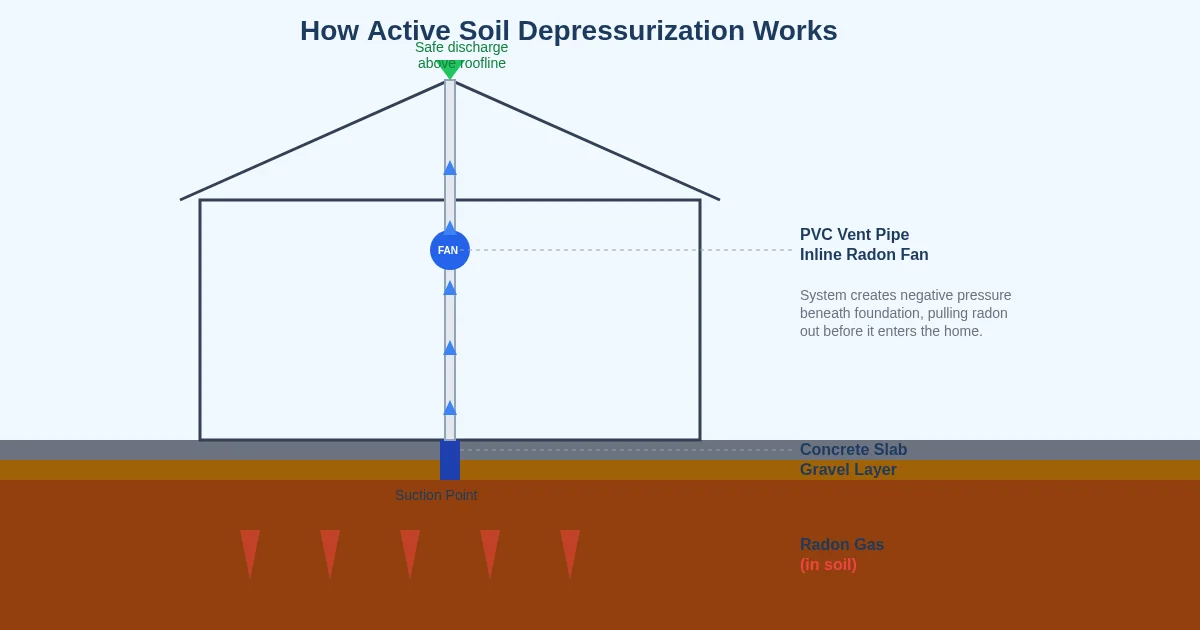
A radon mitigation system operates on a straightforward principle: create a pathway for radon gas to escape from beneath your home before it enters your living spaces. While the concept is simple, proper design and installation require specialized expertise to ensure effectiveness.
Active Soil Depressurization: The Gold Standard
The most widely used and EPA-recommended method is called active soil depressurization (ASD). This system consists of three main components:
- Suction point: A hole is drilled through the basement slab or crawl space floor to access the soil beneath your foundation. In some cases, multiple suction points may be needed depending on your home’s footprint and foundation design.
- PVC piping: A sealed pipe connects the suction point to a discharge point above the roofline. The pipe is typically routed through the interior of the home or along an exterior wall, depending on the layout.
- Inline radon fan: An electrically powered fan creates continuous negative pressure beneath the foundation, pulling radon-laden air from the soil and exhausting it safely above the roof.
The system runs continuously, drawing radon from the soil before it can enter your home through foundation cracks, utility penetrations, sump pits, or floor drains. When properly designed and installed, active soil depressurization reduces radon levels by up to 99%.
If you are concerned about radon in your South Dakota home, request a free radon test kit to find out your home’s radon levels.
Passive Radon Systems
Some newer homes are built with passive radon-resistant features as part of the building code. A passive system includes:
- A gas-permeable layer (typically 4 inches of clean gravel) beneath the slab
- A vapor barrier of polyethylene sheeting
- A sealed PVC vent pipe routed from beneath the slab to above the roof
- Sealed cracks and openings in the foundation
Passive systems rely on natural air pressure differentials and the “stack effect” rather than a fan. They can be effective in some homes but are generally less reliable than active systems. The key advantage of a passive system is that it can easily be upgraded to an active system by adding a fan if post-construction testing reveals elevated radon levels.
Additional Radon Reduction Methods
While active soil depressurization is the standard, several other methods exist:
- Sub-membrane depressurization: Used in crawl spaces with dirt floors. A heavy-duty vapor barrier is sealed over the soil, and a fan creates suction beneath the membrane to capture radon before it enters the home.
- Drain tile suction: Connects to your home’s existing interior or exterior drain tile system to draw radon-laden soil gases and vent them outside.
- Sump pit suction: Utilizes an existing sump pit as the suction point by adding an airtight lid and connecting it to a vent pipe and fan.
- Block wall suction: Used in homes with hollow-block foundation walls, where radon can accumulate inside the block cavities.
- Heat recovery ventilator (HRV): An energy recovery ventilation system that increases air exchange to dilute indoor radon concentrations while recovering heat energy. Often used as a supplemental measure.
- Sealing and caulking: Closing cracks and openings in the foundation to limit radon entry points. Sealing alone is not considered a standalone solution by the EPA, but it improves the performance of other mitigation methods.
Types of Radon Mitigation Systems for South Dakota Homes
The right system for your home depends on your foundation type, soil conditions, existing construction features, and the severity of the radon levels detected. Here is how the most common systems compare:
Systems for Homes with Basements
Most South Dakota homes have basements, making sub-slab depressurization the most common approach. The installer drills one or more suction points through the concrete slab, connects PVC piping, and installs a radon fan. The pipe is routed vertically to a discharge point above the roofline.
In homes with sump pumps, the sump pit can often serve as the suction point. The installer seals the sump lid to make it airtight and connects the vent pipe and fan. This approach works especially well when the sump is connected to interior drain tile, as the existing drainage network extends the area of depressurization across the foundation.
Systems for Homes with Crawl Spaces
South Dakota homes with crawl spaces typically require sub-membrane depressurization. A heavy-duty vapor barrier, such as the CleanSpace encapsulation system, is installed over the dirt floor and sealed to the foundation walls. A suction point and vent pipe are placed beneath the membrane, and a fan draws radon-laden air from under the barrier to the outdoors.
This approach delivers the added benefits of reducing moisture, controlling humidity, and improving overall crawl space air quality, all of which are significant concerns for South Dakota homeowners dealing with the region’s seasonal moisture fluctuations.
Systems for New Construction
If you are building a new home in South Dakota, incorporating radon-resistant features during construction is far simpler and more efficient than retrofitting later. South Dakota building practices increasingly include passive radon systems as a standard feature, with provisions for easy upgrade to active systems if needed.
New construction radon-resistant features typically include a gas-permeable gravel layer, vapor barrier, sealed vent pipe, and sealed foundation cracks and penetrations.
What to Expect During Professional Installation
Professional radon mitigation system installation is a straightforward process that typically takes one day to complete. Here is what you can expect when working with a qualified contractor:
Step 1: Home Assessment
A trained radon mitigation specialist visits your home to evaluate the foundation type, layout, soil conditions, and existing construction features. This assessment determines the optimal system design, including the number and location of suction points, piping route, and fan placement.
Step 2: Creating the Suction Point
The installer drills through the basement slab or prepares the crawl space for sub-membrane depressurization. In some cases, particularly in larger homes or homes with complex foundations, multiple suction points may be needed to achieve adequate depressurization across the entire footprint.
Step 3: Sealing Entry Points
All visible cracks, gaps, and openings in the foundation are sealed with specialized caulking. This includes cracks in the slab, gaps around utility penetrations, and openings around sump pits. While sealing alone is not sufficient, it significantly improves system performance by reducing the number of pathways through which radon can enter.
Step 4: Installing the Piping and Fan
PVC piping is routed from the suction point to the discharge point above the roof. The radon fan is installed in the piping run, typically in an attic, garage, or exterior location. The fan is connected to electrical power and runs continuously.
Step 5: System Verification
After installation, the contractor checks the system’s performance using diagnostic measurements to confirm adequate suction beneath the foundation. A U-tube manometer or similar gauge is installed on the piping to provide a visual indicator that the system is operating correctly.
Step 6: Follow-Up Testing
Approximately 30 days after installation, a follow-up radon test is conducted to verify that the system has reduced radon levels below the EPA action level of 4 pCi/L. Most properly designed systems bring levels well below 2 pCi/L.
Worried about radon levels in your home? Contact Blackburn Foundation Repair for a free inspection and personalized mitigation plan. Call 1-800-392-3389.
Choosing the Right Radon Mitigation Contractor
Not all radon mitigation contractors are equal. The quality of the installation directly impacts how effectively the system reduces radon levels in your home. Here is what to look for:
Certifications and Training
Look for contractors certified through nationally recognized programs such as the National Radon Proficiency Program (NRPP) or the National Radon Safety Board (NRSB). These certifications ensure the contractor has completed required training and follows established installation standards.
Membership in professional networks like the National Radon Defense network provides additional assurance of ongoing education and access to the latest mitigation techniques. Blackburn Foundation Repair, for example, is the #2 ranked National Radon Defense dealer in the nation (2021-2022 national sales rankings), reflecting a high volume of successful installations and deep expertise in the field.
Experience with Local Conditions
South Dakota’s soil types, climate, and building practices create unique challenges for radon mitigation. A contractor with extensive regional experience understands the nuances of local geology, the impact of freeze-thaw cycles on foundation integrity, and the building construction methods common in the tri-state area.
Blackburn Foundation Repair has served homeowners across South Dakota, Wyoming, and Nebraska for over 30 years, with dedicated radon mitigation specialists including a specialized radon foreman on staff. This level of regional expertise ensures systems are designed for the specific conditions of your home and location.
What to Ask Your Contractor
Before hiring a radon mitigation contractor, ask the following questions:
- Are you certified through NRPP or NRSB?
- How many radon systems have you installed in this area?
- Will you conduct a follow-up test after installation?
- What type of warranty do you provide on the system?
- Do you carry liability insurance specific to radon work?
- Can you explain the system design you are recommending for my home?
A reputable contractor will answer these questions confidently and provide a clear explanation of the proposed system, including why it is the right fit for your home.
Maintaining Your Radon Mitigation System
One of the advantages of a radon mitigation system is that it requires very little ongoing maintenance. However, basic upkeep ensures the system continues to protect your home effectively for years to come.
Regular Monitoring
Check the system’s visual indicator (typically a U-tube manometer on the vent pipe) periodically to confirm the fan is operating. If the fluid levels in the manometer are equal, the fan may have stopped working and should be inspected.
Periodic Retesting
The EPA recommends retesting your home for radon every two years, even with an active mitigation system in place. Retesting confirms the system is still performing effectively and catches any changes caused by foundation settling, new cracks, or alterations to the home.
Fan Replacement
Radon fans are designed for continuous operation and typically last 7 to 12 years. The South Dakota DANR notes that replacement fans generally run between $145 and $300. Your contractor can advise on the best replacement schedule based on your specific system.
System Inspections
If you already have a radon mitigation system installed, periodic professional inspections can identify potential issues before they affect performance. Blackburn Foundation Repair offers existing radon system inspections to ensure your system is functioning as designed.
When You Need a Radon Mitigation System
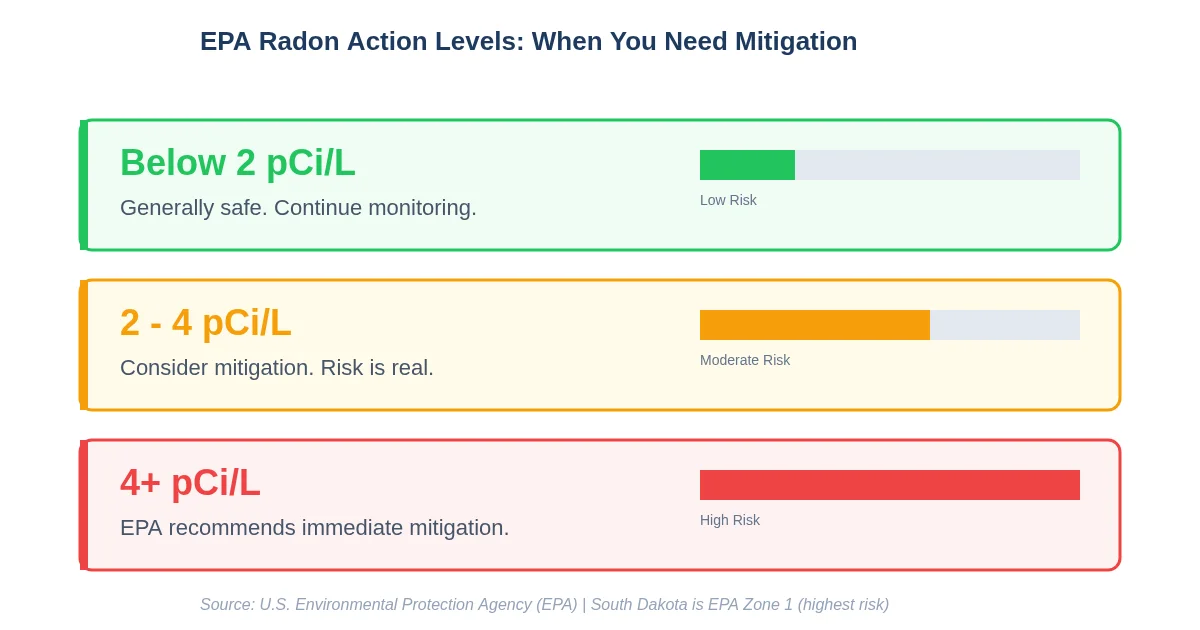
The decision to install a radon mitigation system should be based on testing results. Here are the guidelines:
- 4 pCi/L or higher: The EPA strongly recommends mitigation. This is the official action level.
- Between 2 and 4 pCi/L: The EPA suggests considering mitigation, as there is no safe level of radon exposure.
- Below 2 pCi/L: Generally considered acceptable, but continued monitoring is advised.
Situations That Increase Urgency
Certain situations make radon mitigation especially important:
- Real estate transactions: Many lenders and buyers require radon testing and mitigation as part of the home-buying process. A properly installed mitigation system with documented post-installation test results provides confidence to buyers and protects your property’s value.
- Pregnant women or young children in the home: Children and developing fetuses may be more vulnerable to the effects of radon exposure.
- Smokers in the household: The combination of smoking and radon exposure dramatically increases lung cancer risk. The EPA estimates that the risk for smokers exposed to elevated radon levels is 10 times greater than for non-smokers.
- Home renovations: If you are finishing a basement or modifying your foundation, it is the ideal time to incorporate radon mitigation into the project.
Frequently Asked Questions
What is a radon mitigation system?
A radon mitigation system is a professionally installed ventilation system that removes radon gas from beneath your home’s foundation and vents it safely above the roofline. The most common type uses a sealed pipe and inline fan to create continuous suction beneath the slab or crawl space, preventing radon from entering your living areas.
How does a radon mitigation system work?
The system creates a negative pressure zone beneath your home’s foundation using a fan and sealed piping. This draws radon-laden soil gas away from the foundation and exhausts it above the roof, where it disperses harmlessly into the outdoor air. The fan runs continuously, providing 24/7 protection.
Do radon mitigation systems really work?
Yes. Properly designed and installed radon mitigation systems can reduce indoor radon levels by up to 99%. The EPA, Surgeon General, and World Health Organization all endorse active soil depressurization as an effective method for reducing radon in homes. Most systems bring indoor levels well below the 4 pCi/L action level, often to 2 pCi/L or less.
How long does installation take?
Most professional radon mitigation system installations are completed within a single day. The exact timeline depends on the complexity of the home’s foundation, the number of suction points needed, and the piping route. A follow-up radon test is typically conducted about 30 days after installation to confirm the system is performing effectively.
Should I buy a house that has a radon mitigation system?
Absolutely. A home with a properly installed and maintained radon mitigation system is actually a positive indicator. It means the previous owner took proactive steps to address radon, and you have documented proof that the home’s air quality meets safe standards. Ask for the post-installation test results and verify the system is in good working condition.
How often should I test for radon if I have a mitigation system?
The EPA recommends retesting every two years, even with an active system in place. Regular retesting confirms the system continues to perform effectively and identifies any changes in radon entry caused by foundation settling, new construction, or system wear.
Protect Your South Dakota Home from Radon
Radon is a serious health threat that affects homes throughout South Dakota, Wyoming, and Nebraska. The good news is that modern mitigation systems are highly effective, minimally invasive, and provide long-term protection for your family.
If you have not tested your home for radon, start with a free radon test kit from Blackburn Foundation Repair. If your test results show elevated levels, our team of certified radon mitigation specialists, backed by over 30 years of regional experience and our ranking as the #2 National Radon Defense dealer in the nation, will design and install a system tailored to your home.
Schedule your free inspection today. Call 1-800-392-3389 or contact us online to get started.