
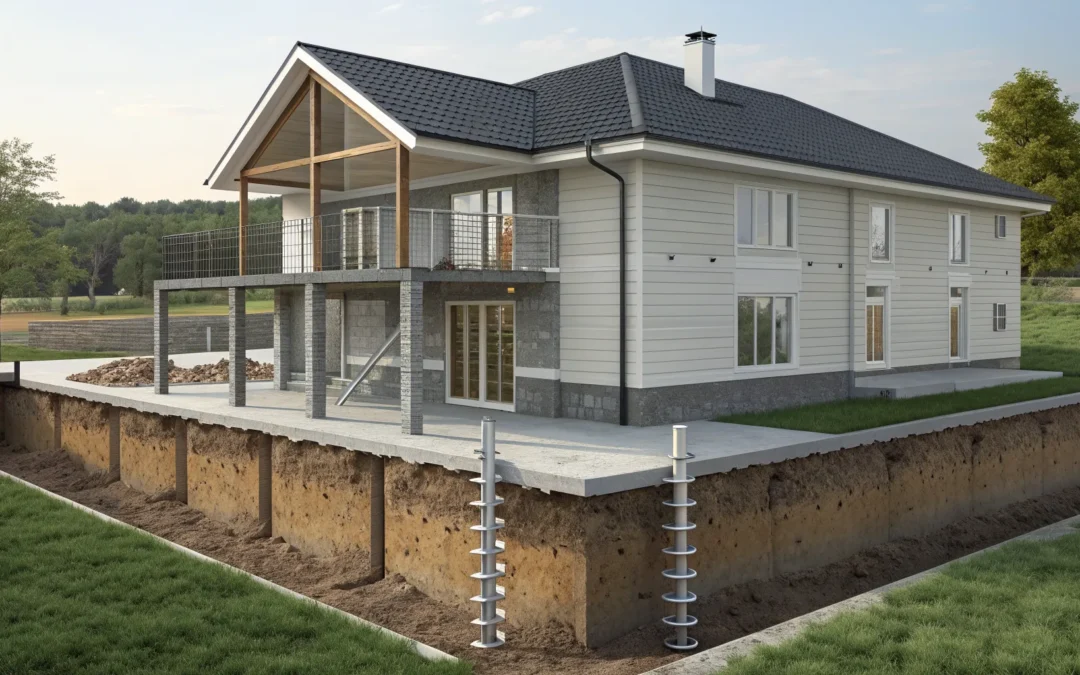
The thought of foundation repair often brings to mind images of major excavation, a torn-up yard, and weeks of disruption. Fortunately, technology has come a long way. You no longer have to sacrifice your landscaping to secure your home. Helical piers offer a modern, minimally invasive solution to foundation settlement. Using smaller, specialized equipment, these steel piers are screwed into the ground with very little disturbance to your property. The process is not only cleaner but also significantly faster than traditional methods. You get a powerful, permanent fix for your foundation without the mess and stress of a massive construction project in your yard.
Key Takeaways
- Helical piers offer a permanent fix for foundation settlement: These steel piers are screwed deep into the ground to reach stable soil, transferring your home’s weight to a solid base and immediately stopping any further sinking.
- A successful repair depends on a custom approach: The right pier size, quality, and installation depth must be matched to your home’s specific weight and soil conditions, making a professional assessment the critical first step.
- Choosing the right contractor is essential for a lasting solution: Look for a licensed, local expert with proven experience in your region’s soil who can clearly explain their installation process and quality control measures.
What Are Helical Piers & How Do They Work?
If you’ve noticed cracks in your walls or floors that seem to be getting worse, you might be dealing with a settling foundation. It sounds scary, but there are modern, effective solutions to secure your home. One of the most reliable methods is using helical piers. Think of them as giant steel screws that anchor your house to solid ground, providing a permanent fix for foundation settlement. Let’s break down what these piers are and exactly how they work to protect your home.
Breaking Down the Design: Steel Shafts and Plates
So, what does a helical pier actually look like? Imagine a large steel screw. That’s the basic idea. Each pier is made of a strong, galvanized steel shaft that resists rust and corrosion for long-term stability. Welded to this central shaft are one or more screw-like plates, which are called helices. These plates are the key to the pier’s strength. They are designed to cut through the soil as the pier is twisted into the ground, much like a screw goes into wood. This design allows the pier to anchor itself firmly deep within the earth, creating an incredibly stable base for your home’s foundation.
The Installation Process: How They Support Your Home
The way helical piers are installed is both precise and minimally invasive to your property. Using hydraulic machinery, our team screws each pier deep into the ground, extending past the unstable topsoil that’s causing your foundation to shift. We monitor the pressure required to turn the pier, which tells us exactly when it has reached solid, load-bearing soil or bedrock. Once the pier is securely anchored, we attach a heavy-duty steel bracket to it. This bracket fits under your home’s foundation footing, allowing us to transfer the entire weight of that section of your house off the weak soil and onto the pier. This process provides immediate support, stopping settlement in its tracks and often allowing us to provide foundation repair that lifts your home back toward its original position.
Why Choose Helical Piers? The Top Benefits
When you discover a problem with your foundation, you want a solution that’s effective, long-lasting, and doesn’t turn your property into a massive construction zone. Helical piers check all those boxes, offering a modern approach to foundation repair that comes with some significant advantages over traditional methods. From a faster, cleaner installation to immediate, reliable support, they provide a powerful way to secure your home’s structural integrity for years to come. Let’s look at the key benefits that make helical piers a top choice for homeowners.
Quick Installation with Less Disruption
One of the biggest concerns with any foundation work is the mess and disruption it can cause to your home and yard. Helical piers stand out because their installation process is surprisingly low-impact. Unlike methods that require extensive excavation, helical piers are screwed into the ground using smaller, specialized equipment. This means we can avoid tearing up your landscaping, driveway, or patio. Because there’s minimal soil disturbance, the installation is not only faster but also much cleaner. You get a permanent foundation solution without sacrificing the beautiful yard you’ve worked so hard to maintain.
Immediate, Powerful Support for Your Foundation
With some foundation fixes, you have to wait for concrete to cure before the solution can take on the weight of your home. That’s not the case with helical piers. The moment they are installed, they are ready to go to work. The piers are twisted deep into the earth until they reach stable, load-bearing soil. The installation torque is carefully monitored to ensure each pier has the capacity to support its portion of the structure. This process immediately transfers the weight of your home off the unstable soil and onto the piers, stabilizing your foundation right away and often allowing us to lift it back toward its original position.
A Durable, Long-Lasting Solution
Choosing a foundation repair method is a major decision, and you want to know you’re making a sound long-term investment. Helical piers are engineered for permanence. Made from galvanized steel, they are designed to resist corrosion and withstand the test of time, even in the challenging soil conditions we see across the region. Properly installed helical piers can last for the life of your home, providing a durable and reliable solution you can count on. They work effectively in a wide variety of soil types, from soft and loose to dense clay, making them a versatile and dependable choice for securing your home’s future.
When Are Helical Piers the Right Choice?
Helical piers are one of the most reliable tools for securing a home’s foundation, but they aren’t a universal fix for every single issue. Think of them as a specialized solution that truly excels in certain situations. Understanding when they are the best option can help you make an informed decision about protecting your property. Whether you’re dealing with a house that’s already showing signs of trouble or you’re planning a new build on less-than-perfect ground, helical piers offer a powerful and lasting answer.
They are particularly well-suited for the variable soil conditions we often see across South Dakota and Wyoming. From expansive clays that swell and shrink to looser soils that can’t bear heavy loads, our local geology can be tough on foundations. Helical piers are designed to bypass these problematic upper layers of soil and anchor your home to deep, stable ground. This makes them an ideal choice for a wide range of foundation repair projects, from stabilizing a sinking corner of your house to providing solid footing for a new deck. The key is a professional assessment to determine if they are the right match for your home’s specific needs.
To Correct Foundation Settlement
If you’ve noticed sticking doors, cracked drywall, or sloping floors, your home is likely experiencing foundation settlement. This happens when the soil beneath your house shifts or compacts, causing the foundation to sink unevenly. Helical piers are an excellent solution for this problem. We install these large, screw-like steel piers deep into the earth, past the unstable soil, until they reach solid, load-bearing strata. Once they are securely anchored, hydraulic jacks are used to carefully lift the foundation, potentially closing cracks and returning your home to a more level position. This process provides permanent stability, ensuring your foundation has the deep, unwavering support it needs to stay put for good.
For New Homes on Challenging Soil
Building a new home is exciting, but starting on the right foot is critical. If your lot has soft, loose, or wet soil, a standard foundation might not be enough to prevent future problems. This is where helical piers are a game-changer for new construction. By installing them before the foundation is even poured, you can guarantee your new home has a solid base from day one. This proactive approach is a smart investment that provides peace of mind, knowing your home is anchored to stable ground. It’s a modern, efficient way to build on challenging soil, preventing the stress and expense of future foundation repair before it ever begins.
Versatile Uses for Homes and Businesses
The strength of helical piers isn’t just for your main house foundation. Their versatility makes them a fantastic choice for a variety of other structures. They provide robust support for home additions, detached garages, decks, porches, and even commercial buildings. One of the biggest advantages is the installation process. It’s fast, involves minimal excavation, and doesn’t leave a huge mess in your yard. Unlike traditional concrete footings, there’s no waiting for anything to cure. As soon as the piers are installed, construction can continue. This efficiency saves you time and disruption, letting you enjoy your new project sooner.
Understanding the Cost of Helical Piers
When you’re facing a foundation issue, one of the first questions is always about cost. While every project is unique, we can break down the factors that influence the price of helical piers and explain why they are such a solid investment for your home’s future. Understanding the value they provide over the long term is key to making the right choice for your property.
What Factors Into the Final Price?
The final price tag for a helical pier installation isn’t a simple, flat rate. Instead, it depends on the specific needs of your home. Key factors include the number of piers required to properly support the structure and the depth they must be driven to reach stable, load-bearing soil. Typically, piers are spaced every five to six feet along the affected foundation wall. The complexity of the job and your property’s specific soil conditions also play a role. To get an accurate picture, a thorough inspection is necessary to diagnose the problem and design a custom foundation settlement repair plan.
How Costs Compare to Other Foundation Solutions
It’s natural to compare the cost of helical piers to other methods, like traditional concrete footings. While concrete may sometimes seem cheaper upfront, it’s important to look at the whole picture. Helical pier installation is much faster and creates far less mess and disruption to your yard and landscaping, saving you time and potential restoration costs. Because they can be installed in tight spaces and any weather, they often reduce labor expenses. When you consider the speed, efficiency, and minimal impact, the overall project cost for a helical pier foundation repair is often very competitive.
Why They’re a Great Long-Term Investment
Think of helical piers as a permanent solution, not a temporary patch. They are engineered to last a lifetime, providing a level of durability that often surpasses traditional concrete, especially in the challenging soils we see in our region. By transferring your home’s weight to stable soil deep underground, they stop settlement in its tracks and prevent future issues from developing. This reliability means you won’t have to worry about recurring problems or additional repairs down the road. Investing in a solution that offers a lifetime of support protects your home’s value and gives you lasting peace of mind.
Not All Helical Piers Are Created Equal
When you’re looking at solutions for your home’s foundation, it’s easy to think that one helical pier is just like any other. But the reality is quite different. The effectiveness of a helical pier system depends entirely on choosing the right product and installing it correctly. Think of it like getting a prescription; you need the right medicine at the right dose for it to work. The same principle applies to securing your home’s foundation.
A successful, long-term foundation repair relies on a careful assessment of your home’s specific situation. Factors like the type of soil around your property, the weight of your house, and the specific foundation issue you’re facing all play a huge role in determining the right approach. Using a generic, one-size-fits-all pier can lead to an incomplete fix or even new problems down the line. This is not a place for guesswork. An improperly selected pier might not reach stable soil, or it might not be strong enough to handle your home’s load, which defeats the entire purpose of the repair. That’s why working with an expert who understands these nuances is so important. They can analyze your property’s unique conditions and ensure every component is perfectly suited to give your home the stable support it needs for years to come.
Matching the Pier to Your Home’s Needs
Every home is unique, and so is the ground it sits on. A helical pier designed for the sandy soil of one area might not be suitable for the dense clay in another. The specific foundation issue your home has will dictate the type of pier required. For example, a heavy two-story home will require piers that can handle a much greater load than a small, single-story structure. A professional evaluation is the first step in identifying the right size, capacity, and type of pier that will permanently stabilize your foundation without causing undue stress on the structure. This tailored approach ensures the solution fits your home perfectly.
The Importance of High-Quality Materials
The longevity of a helical pier repair is directly tied to the quality of the materials used. Helical piers are typically made from steel, but the grade and protective coating of that steel make all the difference. High-quality, galvanized steel piers are designed to resist corrosion and stand up to the harsh underground environment for decades. Opting for cheaper, lower-grade materials might save a little money upfront, but it puts your home at risk. These inferior piers can rust and weaken over time, eventually failing and leaving you right back where you started, only with a bigger problem to solve. Investing in quality materials means investing in a permanent solution.
Why Proper Sizing and Depth Matter
A helical pier only works if it’s installed correctly, and that means reaching deep into the ground to find stable, load-bearing soil. The soil near the surface is often unstable and affected by moisture, which is what causes foundation settlement in the first place. The pier must be driven past this shifting soil until it hits a solid layer that can support the weight of your home. The diameter of the pier shaft and the size of the helical plates are also critical. These are carefully calculated to match your home’s load requirements, ensuring the pier can provide the right amount of support without failing under pressure.
Common Myths About Helical Piers, Debunked
Helical piers are a fantastic solution for many foundation problems, but there’s a lot of misinformation floating around. It’s easy to get confused by conflicting advice, especially when you’re worried about your home’s stability. Let’s clear up a few common myths so you can feel confident about your foundation repair choices. Understanding the facts will help you see why this technology is trusted by engineers and contractors to secure homes for the long haul. When you separate fact from fiction, you can make a truly informed decision for your property.
Myth: They aren’t strong enough for the job.
One of the most persistent myths is that helical piers are only suitable for light structures like decks or porches. This couldn’t be further from the truth. These piers are engineered from high-strength galvanized steel and are designed to support incredible loads, often well over 30,000 pounds each. The key is that they are screwed deep into the ground until they reach stable, load-bearing soil. This process transfers the weight of your home from the unstable soil near the surface to a solid stratum below. For a permanent foundation repair, a professional team will ensure the right size and capacity pier is used to support your home’s specific weight.
Myth: They only work for specific problems.
Another common misconception is that helical piers are a niche solution, only useful for large commercial projects or very specific types of soil. In reality, they are incredibly versatile. Helical piers are an ideal choice for correcting foundation settlement in existing homes, providing deep support for new construction on poor soil, and even securing retaining walls. Their adaptability makes them effective in a variety of soil conditions, from clay to sand. While they represent a significant investment in your home, their long-term stability and ability to prevent further costly damage make them a smart, cost-effective solution for a wide range of foundation issues.
Myth: Installation is a simple DIY project.
While the concept of a giant screw might sound simple, installing helical piers is definitely a job for the pros. Proper installation requires specialized hydraulic equipment to drive the piers to the correct depth and torque. A professional contractor performs critical calculations to determine the exact placement and load-bearing capacity needed for your home. They also assess the soil conditions to avoid any potential limitations and ensure a successful outcome. Attempting this as a DIY project can lead to improper installation, further damage to your foundation, and serious safety risks. Always trust an experienced and licensed contractor for this critical work.
How to Find a Qualified Helical Pier Contractor
Choosing the right contractor is just as important as the repair method itself. The success of your helical pier installation depends entirely on the skill of the team doing the work. A proper installation secures your home for decades, while a poor one can lead to more problems. When you hire a professional, you’re investing in their expertise. Here’s what to look for to ensure you’re hiring a qualified contractor who will get the job done right the first time.
Look for Proper Licensing and Local Experience
First, any contractor you consider should be fully licensed and insured. This is the bare minimum and protects you from liability. Beyond that, you need a team with deep local experience. The soil conditions in South Dakota and Wyoming are unique. A local contractor understands our region’s specific soil challenges and building codes. They’ll know exactly how deep the piers must be installed to reach stable, load-bearing earth, ensuring a lasting foundation repair. This local knowledge is critical for a successful and permanent solution.
Read Reviews and Check References
A contractor’s reputation is one of your best vetting tools. Before you call, spend time reading online reviews from previous customers. Look for patterns in the feedback regarding professionalism, communication, and cleanliness. A reliable company will also be happy to provide references. Speaking directly with past clients lets you ask specific questions about their experience and the performance of their helical piers. A contractor with a long list of satisfied customers is a great sign that they have the trained, professional team needed for the job.
Ask About Their Installation and Quality Checks
When you speak with a potential contractor, don’t be afraid to ask detailed questions about their process. Inquire how they determine the correct depth and placement for the piers and what equipment they use. For helical piers to be effective, they must be installed correctly and anchored to your home’s footing with specialized brackets. Ask them to walk you through their quality control process. How do they test the piers during installation to confirm they’ve reached stable soil and can support the required load? A qualified expert will have clear, confident answers and explain the process in a way you can understand.
Related Articles
- Helical Piers and Push Piers – Blackburn Foundation Repair
- New Construction – Blackburn Foundation Repair
- Restoring Stability with Push Piers in Sheridan, WY – Blackburn Foundation Repair
- Foundation Settlement – Blackburn Foundation Repair
- EverBrace – Blackburn Foundation Repair
Frequently Asked Questions
How long does a typical helical pier installation take? One of the best parts of using helical piers is the speed of the installation. For most homes, the entire process can be completed in just a few days. Because we don’t have to wait for concrete to cure or perform extensive excavation, we can secure your foundation and get your home back to normal much faster than with more traditional methods.
Will the installation process destroy my yard and landscaping? We understand how much work you put into your home’s exterior, and our goal is to leave it looking as good as we found it. Helical pier installation is a very low-impact process. We use smaller, specialized equipment that doesn’t require tearing up your entire yard. This means your lawn, garden beds, and patios are generally undisturbed, saving you the headache and cost of major landscape repairs.
Can helical piers actually lift my house back to its original position? The primary goal of installing helical piers is to permanently stop your foundation from settling any further. Once the piers are anchored in stable soil, we can often use hydraulic jacks to carefully lift the foundation back toward its original level. This can help close up wall cracks and fix sticking doors, but the exact amount of lift possible depends on your home’s specific condition.
Are helical piers really a permanent solution? Yes, they absolutely are. We use high-quality, galvanized steel piers that are engineered to resist corrosion and last for the lifetime of your home. By anchoring your foundation to solid, load-bearing soil deep underground, we bypass the unstable surface soils that caused the problem. This provides a durable, reliable fix you won’t have to worry about again.
How do I know if helical piers are the right choice for my foundation problem? Every foundation and property is different, so there isn’t a single solution that works for every situation. The best way to know for sure is to have a professional from our team come out for a thorough inspection. We can assess the specific cause of your foundation issues and determine if helical piers are the most effective and lasting solution for your home.