

Discovering a crack in your foundation can be alarming. Your mind races to worst-case scenarios: structural failure, water damage, or a home that’s suddenly difficult to sell. But here’s the reality, not every foundation crack is a crisis.
Not sure if your crack is serious? Get a free expert assessment →
Some cracks are perfectly normal. Others demand immediate professional attention. The difference depends on the crack’s direction, width, location, and whether it’s actively growing. This guide covers the most common types of foundation cracks, explains what causes them in South Dakota, Wyoming, and Nebraska, and helps you determine when it’s time to call a professional.
- Vertical hairline cracks are usually cosmetic and result from normal concrete curing
- Horizontal cracks are the most serious type, often signaling structural pressure from expanding soils
- South Dakota’s expansive clay soils and freeze-thaw cycles make foundations especially vulnerable to cracking
- Any crack wider than ¼ inch, actively growing, or allowing water intrusion needs professional evaluation
- Blackburn Foundation Repair offers free inspections across SD, WY, and NE to determine if a crack is cosmetic or structural
Types of Foundation Cracks
Understanding what type of crack you’re looking at is the first step in determining whether it’s a minor cosmetic issue or a serious structural concern. Foundation cracks generally fall into five categories based on their direction and pattern.
Schedule a free foundation inspection today →
Vertical Cracks
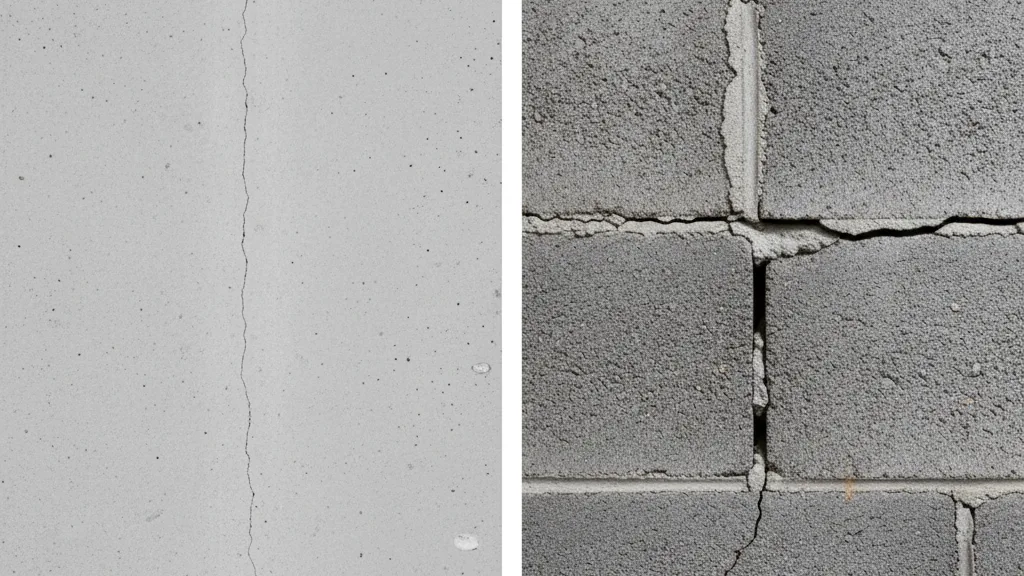
Vertical cracks run straight up and down the foundation wall (or within about 30 degrees of vertical). These are the most common type of foundation crack and are typically the least concerning.
What causes them: Concrete naturally shrinks as it cures during the first few years after construction. This shrinkage creates tension that often results in vertical cracking. Minor settlement can also produce vertical cracks as the home adjusts to the soil beneath it.
When to worry: Most vertical cracks narrower than ⅛ inch are cosmetic and don’t threaten your home’s structural integrity. However, vertical cracks wider than ¼ inch, or those where one side is displaced (higher or lower than the other), may indicate differential settlement that requires professional attention.
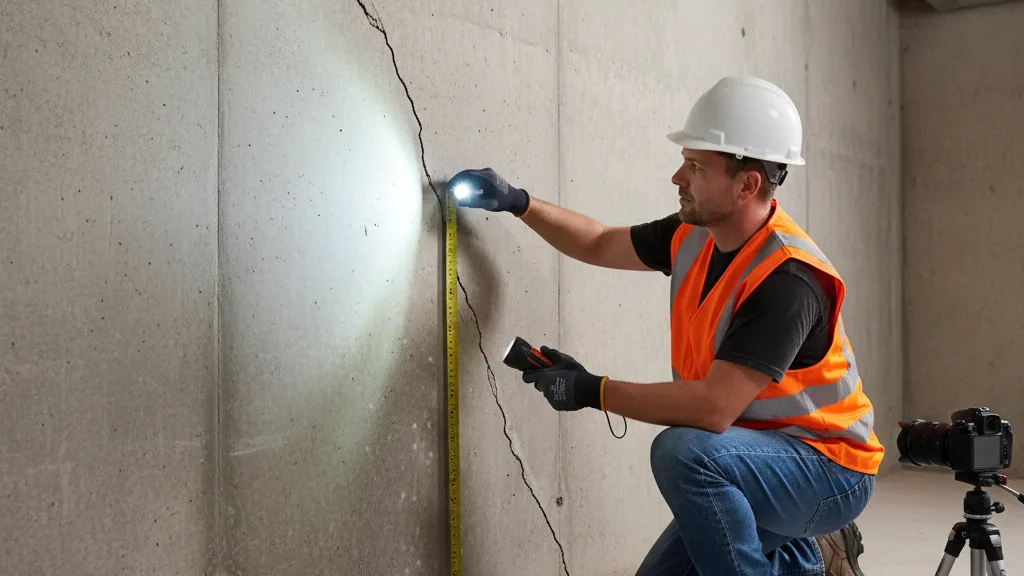
What to watch for: Monitor vertical cracks over time. Mark the ends with pencil lines and measure the width every few months. If the crack grows wider, longer, or starts allowing water to seep through, it’s time for a professional evaluation.
Horizontal Cracks
Horizontal cracks run side to side across a foundation wall and are the most serious type of foundation crack. If you see a horizontal crack in your basement wall, don’t ignore it.
What causes them: Horizontal cracks typically form when external soil pressure pushes against your foundation wall from the outside. In South Dakota, this is especially common due to our expansive clay soils. When clay soils absorb moisture, they expand significantly, creating immense lateral pressure against basement walls. During dry periods, the soil contracts, then expands again when moisture returns, repeating this destructive cycle.
Hydrostatic pressure from water-saturated soil during spring snowmelt is another major cause. The pressure builds up against the foundation wall and can push it inward, creating horizontal cracks and eventually causing the wall to bow.
When to worry: Always. Horizontal cracks are structural until proven otherwise by a professional. They indicate that your foundation wall is being pushed inward, and without intervention, this can progress to wall bowing and potential structural failure.
Diagonal Cracks
Diagonal cracks run at an angle, typically between 30 and 75 degrees from vertical. They often appear near windows, doors, and corners of foundation walls.
What causes them: Diagonal cracks usually result from differential foundation settlement, when one part of the foundation settles more than another. This is common in South Dakota homes where soil conditions vary across the footprint of the house, or where one side of the foundation sits on fill soil while the other rests on undisturbed ground.
When to worry: The severity of a diagonal crack depends on its width and whether the two sides are flush or displaced. Narrow diagonal cracks (under ⅛ inch) with no displacement are generally low risk. Wider diagonal cracks, especially those where one side has shifted vertically, indicate active settlement that needs professional evaluation.
Stair-Step Cracks
Stair-step cracks follow the mortar joints in block or brick foundations, creating a zigzag pattern that looks like a set of stairs. These cracks are only found in masonry foundations (concrete block, brick, or stone), not in poured concrete walls.
What causes them: Stair-step cracks occur when differential settlement causes the mortar joints, the weakest point in a masonry wall, to crack in a stepped pattern. Soil movement, poor drainage, and frost heave in our Northern Plains climate all contribute to this type of cracking.
When to worry: Small hairline stair-step cracks along mortar joints are often just a sign of normal settling. However, wide stair-step cracks (over ¼ inch), those that run the full height of the wall, or patterns where the blocks themselves are cracked (not just the mortar) indicate significant structural movement that needs professional repair.
Hairline Cracks
Hairline cracks are extremely thin, typically less than 1/16 of an inch wide, and can appear in any direction. They’re the most common type of crack found in residential foundations.
What causes them: During the concrete curing process, slight shrinkage is completely normal and expected. Temperature changes during and after curing can also produce hairline cracks. In most cases, these cracks are purely cosmetic.
When to worry: Hairline cracks rarely indicate structural problems on their own. The exception is when you notice multiple new hairline cracks appearing in a pattern, when they begin to grow, or when they allow moisture to seep through. A single, stable hairline crack in a poured concrete wall is almost always harmless.
What Causes Foundation Cracks in South Dakota, Wyoming, and Nebraska?
The tri-state region presents unique challenges for residential foundations. Understanding these local factors helps explain why foundation cracks are so common here, and why some require specialized solutions.
Expansive Clay Soils
South Dakota’s soil profile includes significant deposits of expansive clay, particularly in the eastern part of the state and through the river valleys. These clays absorb water and swell dramatically, then shrink when they dry out. This repeated expansion and contraction cycle exerts tremendous pressure on foundation walls and footings.
The pressure from expanding clay soils is the single most common cause of horizontal cracks and bowing basement walls across our service area. It’s also why diagonal and stair-step cracks appear, as the soil moves unevenly, it pushes and pulls the foundation in different directions.
Freeze-Thaw Cycles
The Northern Plains climate means our region experiences dozens of freeze-thaw cycles every winter. When water in the soil around your foundation freezes, it expands by approximately 9%, creating frost pressure against foundation walls. When it thaws, the soil contracts and settles differently than before.
This freeze-thaw action is especially damaging to foundations that lack proper drainage. Water that collects near the foundation freezes and pushes against the wall, then thaws and seeps into any existing cracks, where it freezes again and widens those cracks further. Over years and decades, this process can turn a harmless hairline crack into a structural concern.
Hydrostatic Pressure
Spring in South Dakota, Wyoming, and Nebraska means snowmelt. When large volumes of snow melt rapidly, the water saturates the soil surrounding your foundation. This creates hydrostatic pressure, the force of water pushing against your basement walls and floor.
Hydrostatic pressure is a leading cause of horizontal basement wall cracks and water intrusion. It can also force water up through floor cracks and the joint where the floor meets the wall, a common issue in homes across Sioux Falls, Rapid City, and the Black Hills region.
Settlement and Soil Compaction
All homes settle to some degree after construction. In our region, the variable soil types, from dense clay to sandy loam to glacial till, mean that different parts of a foundation may settle at different rates. This differential settlement produces diagonal and stair-step cracks as the foundation adjusts.
Homes built on improperly compacted fill soil are especially vulnerable. The soil beneath the foundation compresses over time, and the uneven compression creates stress that cracks the foundation.
Concerned about cracks in your foundation? Get a free expert evaluation →
When to Worry vs. When to Monitor
Not every crack needs immediate repair. Here’s a practical framework for deciding when to act.
Cracks You Can Monitor
- Hairline vertical cracks (less than ⅛ inch wide) that aren’t growing or leaking
- Small stair-step cracks along mortar joints with no displacement
- Narrow diagonal cracks (under ⅛ inch) near window and door openings
- Cracks that appeared shortly after construction and haven’t changed
How to monitor: Mark the ends of the crack with a pencil and write the date next to it. Take a photo with a ruler or coin for scale. Check again in 90 days. If nothing has changed, check every 6 months. This simple tracking gives you objective data to share with a professional if the crack does start growing.
Cracks That Need Professional Evaluation
Contact a foundation repair specialist if you observe any of the following:
- Any horizontal crack, regardless of width
- Any crack wider than ¼ inch, regardless of direction
- Cracks that are actively growing, getting wider, longer, or developing new branches
- Displacement, one side of the crack is higher or lower than the other
- Water intrusion, moisture seeping through a crack, especially during rain or snowmelt
- Multiple crack types together, vertical plus stair-step, or diagonal cracks in multiple walls
- Accompanying symptoms, doors and windows sticking, floors sloping, gaps between walls and ceilings
When multiple warning signs appear together, they paint a clearer picture of foundation movement. A single vertical crack is usually harmless. But a vertical crack combined with sticking doors, a sloping floor, and a stair-step crack in the opposite wall? That pattern suggests active foundation settlement that needs professional attention.
DIY Monitoring vs. Professional Repair
What Homeowners Can Do
For minor, cosmetic cracks that aren’t structural, homeowners can take several steps:
- Document and track, Photograph cracks with a measuring reference, note the date, and recheck regularly
- Manage drainage, Ensure gutters direct water at least 4–6 feet from the foundation, and grade the soil away from the house
- Control moisture, Reduce soil saturation near the foundation by fixing leaky hose bibs, adjusting sprinkler patterns, and maintaining proper grading
- Seal non-structural cracks, Cosmetic cracks in poured concrete can be sealed with appropriate products to prevent water infiltration, but this does NOT fix the underlying cause of structural cracks
When Professional Repair Is Essential
Structural cracks, horizontal cracks, wide diagonal cracks, growing cracks, or any crack accompanied by wall bowing or displacement, require professional repair solutions. Attempting to seal or patch a structural crack without addressing the root cause is like putting a bandage on a broken bone.
Blackburn Foundation Repair has been solving foundation problems across South Dakota, Wyoming, and Nebraska for over 30 years. Our certified technicians use proven, warrantied solutions designed to permanently stabilize your foundation:
- Push Piers and Helical Piers: Steel piers driven deep into load-bearing soil or bedrock to stabilize settling foundations. These systems can often lift the foundation back toward its original position, helping close cracks caused by settlement.
- GeoLock Wall Anchors: The industry’s top-rated wall anchor system for stabilizing and straightening bowing or cracking basement walls. Earth anchors installed in stable soil connect to interior wall plates via steel rods, counteracting the pressure that caused the cracking.
- PowerBrace System: Zinc-plated steel beams custom-fitted to your basement wall height, designed to permanently stabilize failing walls with the ability to gradually tighten over time and potentially reverse wall movement.
- EverBrace Wall Restoration: For severely deteriorating foundations, this advanced system uses corrugated steel panels and rigid foam injection to restore wall integrity without full foundation replacement.
- Carbon Fiber Reinforcement: For walls with early-stage bowing, carbon fiber strips provide permanent stabilization with a low-profile, non-invasive installation.
Every repair we perform is backed by a lifetime transferable warranty, giving you lasting protection and adding value to your home.
Frequently Asked Questions
Are foundation cracks normal?
Yes, many foundation cracks are completely normal. Small vertical and hairline cracks commonly appear as concrete shrinks during the curing process, which takes 1–3 years after construction. These cosmetic cracks are not structural concerns. However, horizontal cracks, wide cracks (over ¼ inch), and cracks that actively grow over time are NOT normal and should be evaluated by a foundation repair professional.
How do I know if a foundation crack is serious?
Look at four factors: direction, width, growth, and accompanying symptoms. Horizontal cracks are the most serious, as they indicate lateral pressure on the wall. Any crack wider than ¼ inch warrants inspection. Cracks that grow over weeks or months indicate active foundation movement. And cracks paired with bowing walls, sticking doors, sloping floors, or water intrusion suggest structural issues that need professional repair.
Can foundation cracks cause water damage?
Absolutely. Even small cracks can allow water to enter your basement or crawl space during heavy rain or spring snowmelt. In South Dakota, where hydrostatic pressure from snowmelt is common, foundation cracks are a primary entry point for water intrusion. Left unaddressed, water entering through foundation cracks can lead to mold growth, damage to stored belongings, and further deterioration of the foundation.
Do foundation cracks affect home value?
Unaddressed foundation cracks can significantly impact your home’s marketability. Buyers and home inspectors scrutinize foundation cracks during the sale process, and structural issues can delay or derail a transaction. However, professionally repaired foundation issues, especially those backed by a lifetime transferable warranty like Blackburn provides, can actually reassure buyers that the problem has been properly addressed.
Why are foundation cracks common in South Dakota?
South Dakota’s combination of expansive clay soils, extreme freeze-thaw cycles, and heavy spring snowmelt creates the perfect conditions for foundation cracking. The clay soils expand when wet and contract when dry, putting constant stress on foundations. Freeze-thaw cycles crack concrete and shift soil. And snowmelt creates hydrostatic pressure that pushes against basement walls. These regional factors make regular foundation monitoring especially important for homeowners across SD, WY, and NE.
When should I call a foundation repair specialist?
Call a professional if you see horizontal cracks, cracks wider than ¼ inch, cracks that are growing, wall bowing, or cracks accompanied by sticking doors, sloping floors, or water intrusion. Blackburn Foundation Repair offers free inspections across South Dakota, Wyoming, and Nebraska, our experts will tell you honestly whether a crack needs repair or just monitoring. With over 30 years of experience and certifications from Foundation Supportworks, we’ve seen every type of foundation crack and know exactly what each one means for your home.
Protect Your Home’s Foundation
Foundation cracks are common in South Dakota, Wyoming, and Nebraska, but they don’t all require the same response. Understanding the difference between a harmless hairline crack and a structural warning sign empowers you to make informed decisions about your home.
The bottom line: monitor small vertical and hairline cracks. Act on horizontal cracks, wide cracks, and growing cracks. And when in doubt, get a professional opinion.
Blackburn Foundation Repair has been the region’s trusted foundation expert since 1992. Our certified team inspects thousands of foundations every year across three states, and we’ll give you an honest assessment, even if the answer is “you don’t need any repair right now.”
Schedule your free foundation inspection today. Call 1-800-392-3389 or contact us online →