

Key Takeaways
- Moisture is the root cause. Crawl space mold doesn’t grow without excess humidity. Open vents, dirt floors, and poor drainage create the conditions mold needs to thrive.
- You may already be breathing it in. Up to 50% of the air you breathe on the first floor of your home originates from the crawl space below, carrying mold spores, musty odors, and allergens with it.
- DIY treatments only address the surface. Spraying bleach or antimicrobial products on mold without eliminating the moisture source means the mold returns within weeks.
- Professional encapsulation stops the cycle. A sealed crawl space with a vapor barrier and dehumidifier eliminates the conditions mold needs to grow, providing a permanent solution.
What Causes Mold in a Crawl Space?
Mold requires three things to grow: moisture, organic material, and warmth. A crawl space with a dirt floor, open vents, and exposed wood framing provides all three in abundance. Understanding the specific moisture pathways helps explain why this problem is so common in South Dakota, Wyoming, and Nebraska homes.
Schedule your free crawl space inspection today.
Dirt Floors and Ground Moisture
A crawl space with an exposed dirt floor allows moisture vapor to continuously rise from the soil into the space. In our tri-state region, seasonal freeze-thaw cycles and spring snowmelt drive significant groundwater movement, pushing even more moisture upward. This constant evaporation keeps humidity levels dangerously high, often exceeding 70%, which is well above the 60% threshold where mold growth accelerates.
Open Crawl Space Vents
For decades, building codes required vents in crawl spaces, operating on the theory that outside air would circulate and dry the space. In practice, the opposite happens. During South Dakota summers, warm humid air enters through the vents and meets the cooler surfaces inside the crawl space. This temperature difference causes condensation to form on floor joists, subfloor decking, and ductwork, creating the persistent moisture that feeds mold colonies.
In winter, frigid outside air enters through those same vents, cooling pipes and ducts and forcing your heating system to work harder. The temperature differential still produces condensation, and the moisture problem continues year-round.
Plumbing Leaks and Standing Water
Slow plumbing leaks are a common but often overlooked cause of crawl space mold. Because most homeowners rarely enter their crawl spaces, a small drip from a pipe joint or condensation on water lines can go undetected for months. By the time the issue is discovered, mold has had ample time to colonize large areas of wood framing. Standing water from poor drainage or groundwater intrusion creates an even more severe situation, providing a constant moisture source that can fuel rapid mold growth across the entire crawl space. A properly installed sump pump system can help manage groundwater and prevent standing water from accumulating.
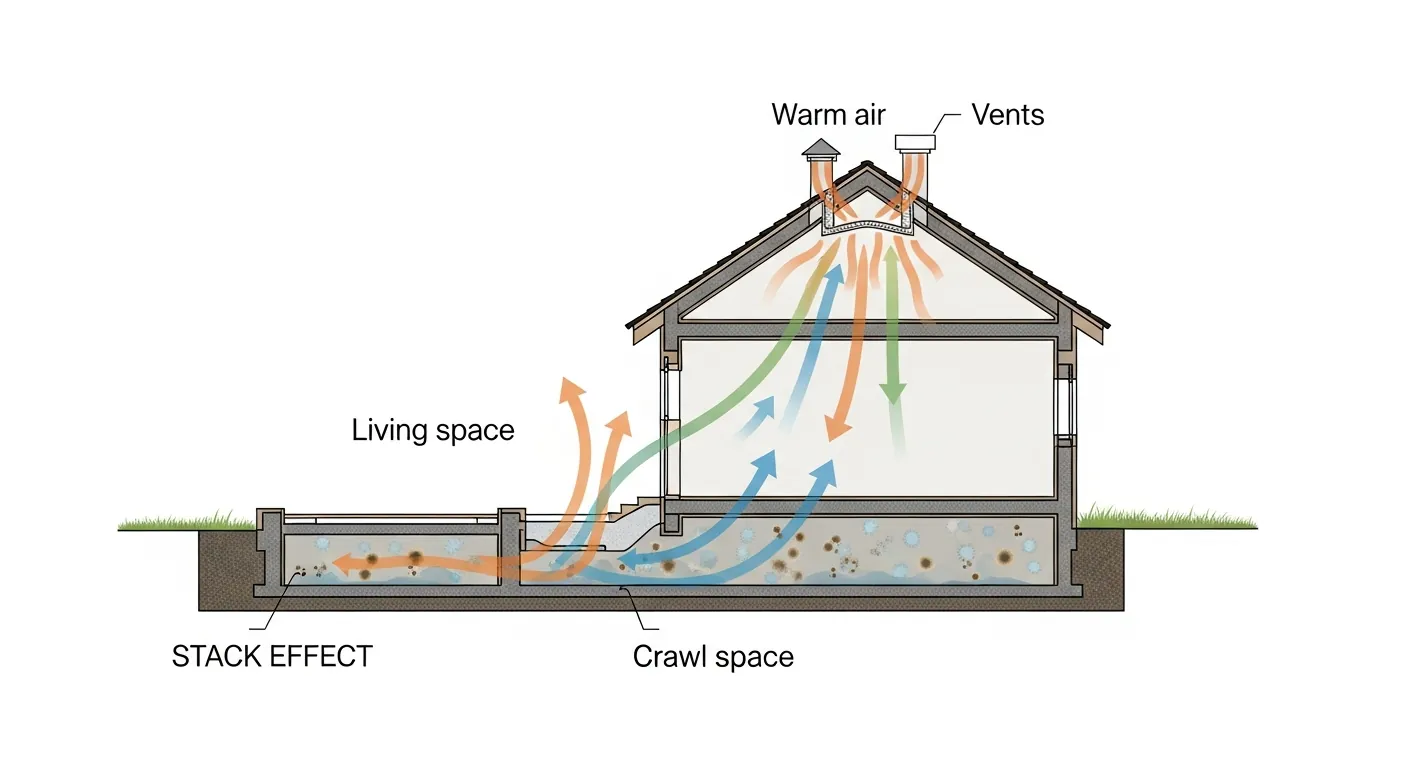
The Stack Effect: How Crawl Space Air Enters Your Home
Your home works like a chimney. As warm air rises and exits through the upper levels, replacement air is drawn upward from the lowest point, which is the crawl space. This phenomenon, known as the stack effect, means that roughly 40-50% of the air on your first floor has passed through the crawl space. If there’s mold in a crawl space beneath your home, you’re breathing mold spores in your living room, kitchen, and bedrooms, whether you realize it or not.
Warning Signs of Crawl Space Mold
Mold in a crawl space often goes unnoticed for months or even years because most homeowners don’t regularly inspect the area. However, the signs frequently appear in your living spaces above. Knowing what to look for can help you catch the problem early, before it causes extensive structural damage.
Musty or Earthy Odors
A persistent musty smell in your home, especially on the first floor, is one of the most reliable indicators of crawl space mold. This odor is produced by microbial volatile organic compounds (MVOCs) released by active mold colonies. If the smell intensifies during humid weather or after rain, it strongly suggests a moisture-driven mold problem beneath your home.
Visible Mold Growth on Wood Framing
If you do inspect your crawl space, look for discoloration on floor joists, subfloor panels, sill plates, and support beams. Crawl space mold commonly appears as:
- White or gray fuzzy patches on wood surfaces (often a type of mold or efflorescence)
- Dark green or black discoloration on joists and subflooring
- Yellowish or orange staining on organic materials
- Powdery white residue that can sometimes be confused with efflorescence from concrete, but on wood indicates mold
Any visible growth, regardless of color, warrants professional assessment. Different mold species present different health risks, and accurate identification requires testing.
Increased Allergy Symptoms Indoors
If household members experience worsening allergy symptoms, respiratory irritation, or frequent headaches while inside the home but feel better when they leave, crawl space mold is a likely contributor. Common health effects associated with mold exposure include persistent nasal congestion, sneezing, eye irritation, coughing, and in sensitive individuals, more severe respiratory reactions.
Sagging or Soft Floors
When mold and moisture have been attacking your crawl space for an extended period, the structural wood begins to decay. Sagging, bouncy, or soft spots in your first-floor flooring can indicate advanced wood rot in the joists below. This isn’t just a mold problem anymore; it’s a structural problem that requires immediate attention. Crawl space structural repair becomes necessary when load-bearing wood has been compromised by rot.
High Indoor Humidity
If your home feels unusually humid despite running air conditioning, or if you notice condensation on windows, the excess moisture may be migrating up from the crawl space. A hygrometer reading above 55% relative humidity inside your home, combined with any of the symptoms above, points strongly to a crawl space moisture problem that’s likely fostering mold growth.
Health Risks of Crawl Space Mold
Crawl space mold is more than a property concern; it’s a health hazard. The connection between the air in your crawl space and the air your family breathes makes this a problem that affects everyone living in the home.
Respiratory Issues and Allergies
Mold spores are microscopic and easily become airborne. Once carried into your living space through the stack effect, they trigger inflammatory responses in the respiratory system. For the average healthy adult, this might mean chronic nasal congestion, sneezing, and a scratchy throat. For children, the elderly, or anyone with asthma or existing respiratory conditions, the effects can be significantly more severe, including increased asthma attacks and persistent bronchial irritation.
Mycotoxin Exposure
Certain mold species commonly found in crawl spaces, including Aspergillus and Stachybotrys (black mold), produce mycotoxins. These toxic compounds can cause neurological symptoms like headaches and difficulty concentrating, as well as fatigue, skin irritation, and immune system suppression with prolonged exposure. While not every mold species produces mycotoxins, the risk is significant enough that the EPA recommends treating all indoor mold growth as a potential health concern.
Long-Term Property Damage
Beyond health effects, unchecked mold in a crawl space leads to wood rot, which compromises the structural integrity of your home. Replacing rotted floor joists, subfloor decking, and sill plates is significantly more expensive than addressing the mold and moisture problem early. Mold damage can also affect your home’s resale value and may need to be disclosed to potential buyers.
DIY Crawl Space Mold Removal vs. Professional Treatment
When homeowners discover mold in their crawl space, the first instinct is often to try handling it themselves. While the DIY approach may seem like a simple fix at first, it consistently fails to solve the underlying problem. Understanding the difference between a surface-level fix and comprehensive crawl space mold remediation is critical for protecting your home.
Why DIY Mold Treatment Falls Short
Common DIY approaches to crawl space mold include spraying bleach solutions, applying antimicrobial coatings, or using mold foggers. Here’s why these methods don’t deliver lasting results:
- Surface-only treatment. Sprays and coatings kill visible mold on the surface but don’t penetrate the wood where mold roots (hyphae) extend. The mold regrows within weeks.
- No moisture elimination. If the humidity and moisture source remain, new mold colonies establish themselves almost immediately after treatment.
- Safety risks. Working in a confined crawl space with chemical treatments requires proper respiratory protection and safety equipment that most homeowners don’t have.
- Incomplete coverage. Crawl spaces are difficult to navigate, and it’s easy to miss mold growth on hidden surfaces, rim joists, and structural connections.
What Professional Crawl Space Mold Removal Involves
Professional crawl space mold treatment addresses both the mold itself and the conditions that created it. A comprehensive approach includes:
- Thorough inspection and assessment to identify all affected areas and the moisture sources feeding the mold
- Containment to prevent mold spores from spreading to your living areas during remediation
- HEPA-filtered air scrubbing to capture airborne spores during the removal process
- Physical removal of mold from wood surfaces using professional-grade techniques
- Antimicrobial treatment of affected structural members to kill remaining mold and prevent regrowth
- Moisture source elimination, which is the most critical step and differentiates professional work from DIY attempts
Without step six, the other five are temporary fixes. This is where crawl space encapsulation becomes the permanent solution.
How Crawl Space Encapsulation Prevents Mold
Killing existing mold is only half the battle. If the crawl space environment remains damp, mold returns. The only way to permanently eliminate crawl space mold is to eliminate the moisture that feeds it. That’s exactly what crawl space encapsulation achieves.
The CleanSpace Vapor Barrier System
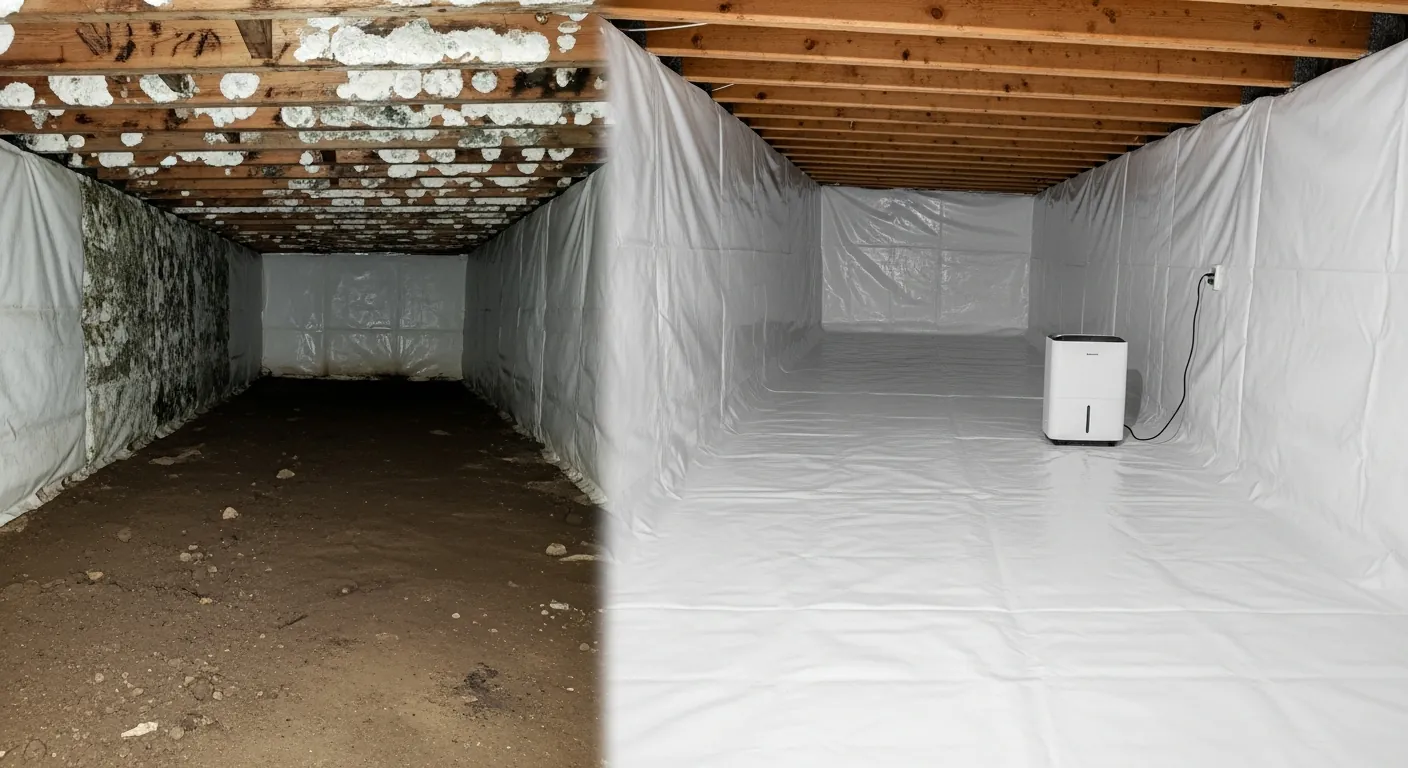
Blackburn Foundation Repair installs the CleanSpace Crawl Space Encapsulation System, a comprehensive moisture control solution designed to transform your crawl space from a damp, mold-prone environment into a clean, dry, conditioned space. The CleanSpace vapor barrier is a 20-mil thick polyethylene liner constructed with seven layers, including high-density polyethylene, low-density polyethylene, and two polyester cord reinforcement layers. This tear-resistant barrier lines the floor and walls of the crawl space, completely isolating the interior from ground moisture.
The CleanSpace barrier features a white outer layer with UltraFresh antimicrobial additive, which actively resists mold growth on the barrier itself. It’s backed by a lifetime warranty against deterioration and also acts as a passive radon mitigation system, an added benefit for homeowners in our region where radon levels are a known concern.
Drainage Matting for Water Management
For crawl spaces that experience standing water or active groundwater intrusion, CleanSpace Drainage Matting is installed beneath the vapor barrier. This dimpled polyethylene matting creates raised channels that direct any water on the floor toward the sump pump system. By actively managing water before it can contact the vapor barrier, the drainage matting ensures the sealed system stays dry even during heavy spring snowmelt or sustained rains.
Dehumidification with the SaniDry CSB
Sealing the crawl space addresses external moisture sources, but the wood framing and soil will still release stored moisture over time. The SaniDry CSB crawl space dehumidifier is specifically engineered for crawl space environments. It uses a 200 CFM blower to circulate dry air throughout the entire space, actively removing humidity and drying out wooden structural members over time.
Key performance features of the SaniDry CSB include:
- Energy Star rated, using one-third less electricity than competing units
- Self-draining capability that eliminates the need to empty collection trays
- 2-micron air filtration that removes mold spores, dust mite waste, and other allergens from the crawl space air
- Automatic operation that maintains consistent humidity levels below the threshold where mold can grow
Together, the CleanSpace barrier, drainage matting, and SaniDry CSB dehumidifier create a three-layer defense that eliminates every moisture pathway mold depends on.
Sealing Vents and Access Points
A complete encapsulation also involves sealing crawl space vents with airtight covers and replacing old access doors with sealed alternatives. Open vents are one of the primary pathways for moisture entry. Airtight vent covers and EverLast crawl space doors stop outside air infiltration, ensuring the conditioned crawl space environment remains stable year-round.
Contact Blackburn Foundation Repair for expert crawl space mold solutions across SD, WY & NE.
For a detailed look at the entire encapsulation process, warning signs, and what to expect during installation, read our complete crawl space encapsulation guide.
How to Prevent Crawl Space Mold From Returning
Once the mold has been treated and the crawl space encapsulated, maintaining a mold-free environment requires ongoing attention to a few simple practices.
Monitor Humidity Levels
Keep crawl space humidity below 55% relative humidity at all times. The SaniDry CSB dehumidifier manages this automatically, but periodic checks give you peace of mind. For comprehensive monitoring, Blackburn Foundation Repair offers the ShipShape Home Monitoring System, which provides 24/7 real-time monitoring of humidity, temperature, and potential water events in your crawl space, alerting you to issues before they become problems.
Manage Exterior Water Flow
Ensure gutters and downspouts direct water at least six feet away from your foundation. Grade the soil around your home so it slopes away from the foundation walls. Poor exterior drainage is one of the most common contributors to crawl space moisture, and addressing it reduces the load on your interior moisture management system.
Schedule Regular Inspections
Even with an encapsulated crawl space, annual professional inspections are recommended. A trained technician can identify early signs of vapor barrier damage, dehumidifier issues, or new moisture sources before they lead to mold regrowth. Blackburn Foundation Repair provides annual maintenance services to keep your system performing at its best.
What to Expect When You Work with Blackburn Foundation Repair
Blackburn Foundation Repair has been solving crawl space moisture and mold problems across South Dakota, Wyoming, and the Nebraska panhandle for over 30 years. As certified members of the Basement Systems Network and Foundation Supportworks, we use patented, proven products backed by lifetime transferable warranties.
The Process
- Free inspection and estimate. A trained specialist inspects your crawl space, identifies all mold and moisture issues, and provides a detailed proposal.
- Professional mold treatment. Existing mold is addressed using industry-standard remediation techniques.
- CleanSpace encapsulation installation. The full encapsulation system, including vapor barrier, vent sealing, drainage matting (if needed), and dehumidifier, is typically installed in one day.
- Ongoing protection. Your crawl space stays dry, clean, and mold-free for the life of your home, backed by our lifetime warranty.
Why Homeowners Trust Blackburn
- 30+ years of local experience serving the tri-state area since 1992
- Certified specialists through Basement Systems, Foundation Supportworks, and National Radon Defense networks
- Patented products not available from general contractors, including CleanSpace, SaniDry, and SmartJack systems
- Lifetime transferable warranties that protect your investment and add value at resale
- BBB A+ Rating and Aspen Award recognition (2025-2026)
Schedule Your Free Crawl Space Inspection
Frequently Asked Questions
How much mold in a crawl space is acceptable?
No amount of active mold growth in a crawl space is considered acceptable by indoor air quality standards. Even a small colony produces spores that circulate into your home through the stack effect. If you see any visible mold or smell a persistent musty odor, it warrants a professional inspection. The goal isn’t to manage mold but to eliminate the conditions that allow it to grow.
Can mold in a crawl space make you sick?
Yes. Mold spores are well-documented respiratory irritants and allergens. Because 40-50% of the air on your first floor comes from the crawl space below, mold growing in that space directly affects your indoor air quality. Common symptoms include nasal congestion, coughing, headaches, eye irritation, and worsened asthma. Certain mold species also produce mycotoxins that can cause more serious health effects with prolonged exposure.
Is crawl space mold covered by homeowners insurance?
Most standard homeowners insurance policies do not cover mold remediation, particularly when the mold results from long-term moisture issues, deferred maintenance, or inadequate ventilation. Some policies cover mold if it results from a sudden, covered event like a burst pipe. Check your specific policy, but plan to budget for mold remediation and prevention separately. Investing in encapsulation is a proactive step that prevents the need for repeated mold treatment and ongoing structural repairs.
How long does crawl space encapsulation take?
A full crawl space encapsulation, including vapor barrier installation, vent sealing, drainage matting, and dehumidifier setup, is typically completed in a single day for an average-sized home. Larger homes or crawl spaces requiring structural repairs may take two days. The system begins working immediately, and you’ll notice improved air quality and reduced humidity within the first week.
What does crawl space mold look like?
Crawl space mold appears in several forms depending on the species and stage of growth. Common appearances include white or gray fuzzy patches on wood surfaces, dark green or black staining on floor joists and subflooring, and powdery white growth that’s sometimes confused with mineral efflorescence. If you see any discoloration on the wood in your crawl space, have it professionally assessed. Accurate identification of the mold species helps determine the appropriate treatment approach.
How to prevent mold in a crawl space?
The most effective prevention strategy is crawl space encapsulation, which seals the space from outside moisture with a heavy-duty vapor barrier, controls humidity with a dehumidifier, and closes vents that let in damp air. Beyond encapsulation, maintain proper exterior drainage, fix plumbing leaks promptly, and schedule annual crawl space inspections. These steps eliminate the moisture that mold requires to grow. Blackburn also offers radon testing for comprehensive home protection. For more information, read our guide on crawl space drainage.