
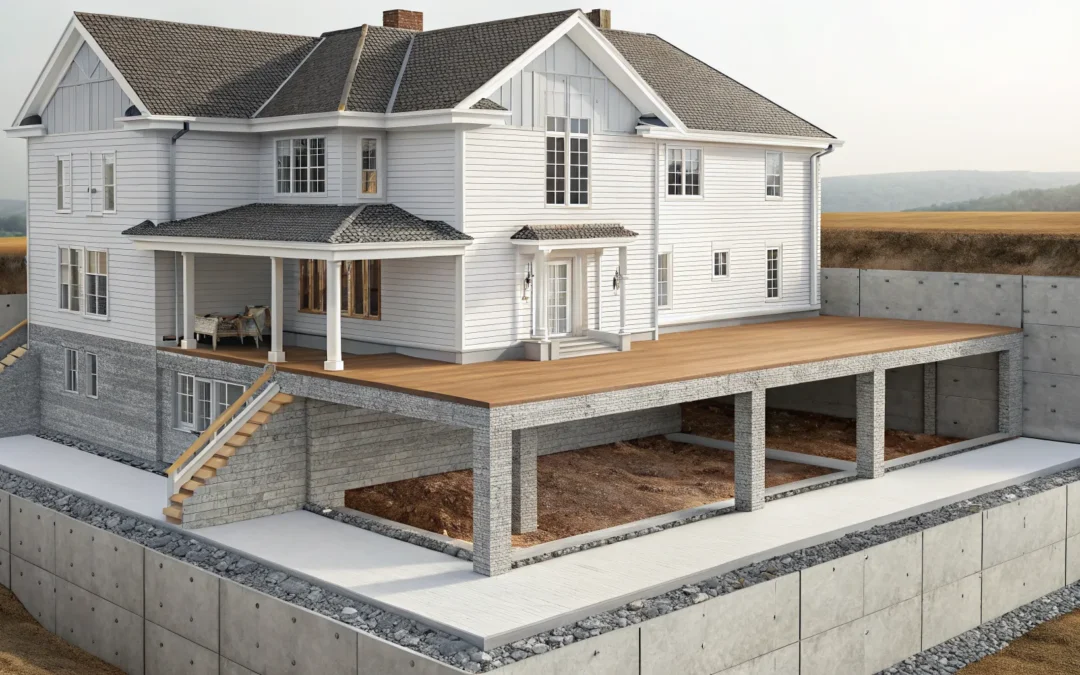
Here in South Dakota, Wyoming, and the Nebraska panhandle, our unique soil conditions play a huge role in construction. The expansive clay and rocky terrain can make building a foundation more complex than in other parts of the country. That’s why looking at national averages for the crawl space foundation cost per square foot doesn’t always tell the whole story. Your project’s final price depends heavily on local factors. This article provides a realistic look at what to expect in our region, breaking down how site preparation, soil stability, and proper drainage directly impact your budget and ensure your foundation is built right.
Key Takeaways
- Get the best of both worlds: A crawl space provides easy access to your home’s utilities, unlike a slab foundation, without the high cost and extensive excavation required for a full basement.
- Look beyond square footage for costs: Your final price isn’t just about your home’s size. The specific conditions of your property, especially soil type and the need for site preparation, play a huge role in the total budget.
- Plan for a dry and healthy space: A crawl space requires proactive moisture management to prevent long-term problems like mold and structural damage. Investing in solutions like encapsulation from the beginning protects your home and saves you from future repairs.
What Is a Crawl Space Foundation?
Think of a crawl space foundation as a happy medium between a concrete slab and a full basement. This type of foundation elevates your home anywhere from 1.5 to 4 feet off the ground, creating a short, accessible space underneath. This “crawl space” is more than just empty air; it’s a critical part of your home’s structure that houses important utilities like plumbing, electrical wiring, and HVAC ductwork. By lifting the main structure, a crawl space creates a protective buffer between your living area and the damp earth below, which is especially important in regions with fluctuating moisture levels.
This design is common in many areas, offering a practical solution for builders working on sloped lots or in areas where deep excavation for a full basement isn’t feasible. However, because it’s an open or vented area under your home, it can be vulnerable to moisture, pests, and extreme temperature changes if not properly sealed and maintained. Keeping this area dry and clean is essential for your home’s structural integrity and the air quality inside. That’s why professional crawl space repair and encapsulation are so important for preventing long-term problems like wood rot, mold growth, and foundation damage. A well-managed crawl space contributes to a healthier, more stable home for years to come.
Key Benefits of a Crawl Space
One of the biggest advantages of a crawl space is accessibility. If you ever have a plumbing or electrical issue, technicians can easily get to the wiring and pipes without having to drill through a concrete slab. This can save you a lot of time, money, and mess during repairs. Another key benefit is protection from ground moisture. Elevating your home helps prevent flooding and reduces the risk of water damage from damp soil. This separation allows air to circulate under the house, which can help manage moisture levels and keep your home’s structure dry and sound when properly managed.
Is a Crawl Space Right for Your Home?
Deciding on a foundation type depends heavily on your location, soil conditions, and budget. Crawl space foundations are often a great fit for sloped properties or areas where the soil isn’t suitable for a basement. Cost is also a major factor. While prices vary, building a crawl space is typically more expensive than a slab foundation but less costly than a full basement. Some industry reports place the cost between $8.50 and $21.00 per square foot. For a new build, this can be a practical compromise that provides utility access without the expense of deep excavation. If you’re considering your options, consulting with a foundation repair expert can help you weigh the pros and cons for your specific property.
How Much Does a Crawl Space Foundation Cost?
Let’s talk numbers. Budgeting for a new foundation is a big step, and you deserve a clear picture of what to expect. The cost of a crawl space foundation isn’t a one-size-fits-all figure. It depends on your home’s size, the materials used, and even the ground your house sits on. Think of it less as a fixed price and more as a range that we can narrow down once we know the specifics of your project. Below, we’ll break down the average costs and look at the unique factors that affect pricing right here in our region.
A Look at the Average Cost Per Square Foot
On average, you can expect a crawl space foundation to cost between $8.50 and $21.00 per square foot. For a typical home, this often adds up to a total project cost of $8,000 to $24,000. This price range generally covers the basic construction. For comparison, a simpler slab-on-grade foundation might run from $4 to $14 per square foot. The higher price for a crawl space reflects the more complex build and the valuable benefits it provides, like easier access to plumbing and electrical systems. Remember, these are just starting points for your budget. The final cost will depend on the specific needs of your foundation repair or new construction project.
Local Cost Factors in SD, WY, and NE
Here in South Dakota, Wyoming, and the Nebraska panhandle, our local soil plays a huge role in foundation costs. If your property has rocky or expansive clay soil, the excavation process becomes more challenging and time-consuming. This can increase the initial project cost to $10,000 or more, simply because it requires more intensive labor and specialized equipment to prepare the site correctly. This is why working with a local expert is so important. We understand the geological conditions of our area and can anticipate these challenges, ensuring your crawl space repair is built to last on a solid, stable base from the very beginning.
What Influences the Final Cost of a Crawl Space?
When you’re budgeting for a new foundation, the cost per square foot is a helpful starting point, but it doesn’t tell the whole story. Several factors can shift the final price, and understanding them will help you get a more accurate picture of your total investment. Think of it like building a custom home; the base price is just the beginning, and the final cost depends on the land, the materials, and the features you choose.
The same logic applies to your foundation. The unique characteristics of your property, from the soil under your feet to the specific design of the crawl space, play a huge role. We’ll walk through the four main elements that influence the final cost: site preparation, materials and labor, soil conditions, and the design choices you make for moisture control. Knowing what to expect can help you plan your budget and ensure you’re investing in a durable, long-lasting crawl space repair or installation that protects your home for years to come.
Site Preparation and Excavation
Before any concrete is poured, your build site needs to be prepared. This initial phase involves clearing the land of trees, rocks, and debris, followed by excavation to dig out the area for the foundation. The amount of work required here can significantly affect your costs. A flat, clear lot will naturally be less expensive to prepare than a sloped or heavily wooded one. This step is absolutely critical because a properly leveled and cleared site is essential for ensuring a stable and solid foundation for your home. It’s the groundwork that everything else depends on.
Materials and Labor
The two biggest line items on your crawl space foundation estimate will almost always be materials and labor. Labor alone can account for about half of the total project cost. This covers the skilled team needed to excavate the site, build the forms, pour the concrete, and construct the foundation walls. The materials include concrete, lumber for framing, rebar for reinforcement, and any necessary fasteners or anchors. The quality of these materials and the complexity of your foundation design will directly impact the final price. Investing in quality work and materials is key to a successful foundation repair or build.
Your Property’s Soil and Drainage
The ground your home sits on has a huge say in the final cost. Ideal soil is stable and easy to excavate, but here in our region, we often deal with challenging conditions. Rocky terrain or dense clay soil can dramatically increase the time and effort needed for excavation, which drives up labor costs. Beyond the soil itself, we also have to consider water drainage. If your property doesn’t drain well naturally, you may need to invest in additional drainage solutions to keep water away from your foundation and prevent future moisture problems in the crawl space.
Foundation Design and Moisture Control
A basic crawl space is one thing, but a healthy, durable one requires a smart design focused on moisture control. Features like vapor barriers, insulation, and proper ventilation are essential for preventing mold, wood rot, and pest infestations. While these additions increase the upfront cost, they save you from expensive repairs down the road. For the ultimate protection, many homeowners opt for crawl space encapsulation, which completely seals the area from outside moisture and humidity. This creates a clean, dry space that protects your home’s structural integrity and can even improve your indoor air quality.
How Crawl Space Costs Compare to Other Foundations
Choosing a foundation is one of the most important decisions you’ll make for your home, and cost is a huge part of that equation. While crawl spaces are a popular choice, it helps to see how their price tag stacks up against the other common options: slab-on-grade and full basement foundations. Understanding these differences will help you figure out which type of foundation gives you the most for your money while meeting your home’s specific needs. Let’s break down the numbers so you can see where your budget fits in.
Crawl Space vs. Slab Foundation
A slab foundation is a single layer of concrete poured directly onto the ground. It’s generally the most straightforward and affordable option. You can expect to pay between $4 and $14 per square foot for a slab. In comparison, a crawl space foundation typically costs between $5 and $16 per square foot. While the crawl space is slightly more expensive upfront, the small price difference buys you significant long-term advantages. The elevated structure provides crucial access to your home’s plumbing and electrical systems, making future repairs much easier and less costly than having to break through concrete. This accessibility is a key reason many homeowners feel the modest extra investment is well worth it.
Crawl Space vs. Basement Foundation
When you compare a crawl space to a full basement, the cost difference is much more dramatic. A basement foundation can cost anywhere from $20 to $50 per square foot, while a crawl space usually falls between $8.50 and $21.00 per square foot. Basements offer the obvious benefit of additional living or storage space, but that comes at a premium. For homeowners who don’t need a full subterranean level but still want to elevate their home off the ground, a crawl space is an excellent, budget-friendly alternative. It provides many of the same protective benefits as a basement, like better insulation from the cold ground, without the extensive excavation and construction costs.
Which Foundation Type Offers the Best Value?
So, which foundation gives you the best bang for your buck? For many homeowners, the crawl space hits the sweet spot. It offers a fantastic balance of cost and functionality that the other options don’t quite match. It provides superior protection from ground moisture compared to a slab and offers easy utility access that a slab foundation lacks. At the same time, it’s significantly more affordable than a full basement. When you consider the long-term benefits and the moderate initial cost, a crawl space often provides the best overall value, making it a smart and practical choice for your foundation repair or new construction project.
The Pros and Cons of a Crawl Space
Crawl space foundations are a popular middle ground between a concrete slab and a full basement, offering a unique blend of affordability and accessibility. Like any foundation type, they come with a distinct set of advantages and potential drawbacks. Understanding both sides of the coin is key to maintaining a healthy and stable home for years to come. Let’s break down what makes a crawl space a great choice for some homeowners and what challenges you should be prepared to manage.
Why Homeowners Choose Crawl Spaces
One of the biggest draws of a crawl space foundation is its cost-effectiveness. Building a crawl space is typically less expensive than excavating for a full basement, making it an attractive option for those looking for a balance between budget and functionality. Beyond the price tag, crawl spaces are incredibly practical for homes built on sloped lots or in areas with high moisture tables, as they elevate the home’s structure off the ground. This elevation also provides convenient access to your home’s plumbing, electrical wiring, and HVAC systems, making future repairs and upgrades much simpler and less invasive than with a slab foundation.
Potential Challenges and Maintenance to Expect
While crawl spaces offer great benefits, they require attention to stay in good shape. A neglected crawl space can cause serious issues like moisture buildup, mold growth, and pest infestations. Because they are often dark and damp, they can become an ideal environment for problems to develop unnoticed. Poor airflow can lead to wood rot and compromise your home’s structural integrity over time. The key to avoiding these issues is proactive maintenance. Proper sealing and ventilation are critical. Regular inspections and investing in professional crawl space repair and encapsulation can prevent small issues from turning into costly, whole-home problems, protecting both your property and your family’s health.
Estimating Your Total Project Cost by Home Size
While every project is unique, your home’s square footage is one of the biggest factors in estimating the cost of a new crawl space foundation. A larger footprint simply requires more materials, more labor, and more extensive site preparation. To give you a clearer picture for your budget, we’ve broken down the typical cost ranges based on three common home sizes. Keep in mind that these figures are for new construction; if you need to fix an existing foundation, the crawl space repair process and costs will be different. These numbers are a great starting point, but a professional estimate is the only way to get a precise quote for your specific property.
Small Homes (Under 1,500 sq ft)
For a smaller home, typically under 1,500 square feet, you can generally expect the cost of a new crawl space foundation to fall between $8,000 and $24,000. This range covers the essentials, from excavation to the final block or concrete work. Where your project lands within this spectrum depends on a few key variables. A straightforward project on a flat lot with stable soil will be on the lower end. However, if your property has a significant slope, requires extensive grading, or has challenging soil conditions that demand deeper footings, the costs will naturally move toward the higher end of the estimate.
Medium Homes (1,500-2,500 sq ft)
If you’re building a medium-sized home between 1,500 and 2,500 square feet, the estimated cost for a crawl space foundation typically ranges from $15,000 to $36,000. The price increase from a smaller home reflects the greater amount of materials needed, including concrete, lumber, and reinforcement, as well as the additional labor hours required to build a larger structure. This size of home often requires more complex engineering to ensure the foundation is properly supported, which can also influence the final cost. Think of this as a foundational investment that ensures the long-term stability and safety of your home for years to come.
Large Homes (2,500+ sq ft)
For large homes over 2,500 square feet, the cost is often calculated per square foot, typically ranging from $8.50 to $21.00. For a 2,500-square-foot home, this translates to a total project cost between $21,250 and $52,500. This wide range accounts for the vast differences in large-scale projects. A custom architectural design, the need for specialized moisture control systems like crawl space encapsulation, or difficult site conditions can all place the cost at the higher end. While the overall price is higher, the per-square-foot cost can sometimes be more efficient due to economies of scale in purchasing materials and scheduling labor for a larger project.
How to Plan Your Crawl Space Project
Turning a crawl space plan into a reality involves more than just breaking ground. A successful project requires careful planning, from getting a clear-eyed view of the costs to thinking about the long-term health of your home. By mapping out your budget and maintenance strategy from the start, you can ensure your new foundation is a solid investment that serves you well for years to come.
Getting an Accurate Estimate
The first step in any plan is figuring out the cost. While online resources provide a general idea, with averages ranging from $8,000 to $24,000, a precise quote depends entirely on your specific property. Factors like your home’s size, local material costs, and regional building codes all play a role. Some sources suggest a price of about $8.50 to $21.00 per square foot, but this can shift based on your location. The only way to get a number you can truly budget around is to schedule a professional inspection. An expert can assess your site, understand your goals, and provide a detailed estimate for your foundation repair or construction project.
Smart Budgeting for Your Foundation
Your final cost will include more than just materials and labor. Site preparation is a major line item that many homeowners overlook. Excavation alone can cost between $3,000 and $10,000, and that price can climb if your property has rocky or heavy clay soil, which is common in our area. When you build your budget, be sure to account for these preparatory steps. It’s also wise to set aside a contingency fund, typically 10% to 15% of the total project cost, to cover any unexpected issues that might arise. This financial cushion gives you peace of mind and keeps the project moving smoothly.
Protecting Your Investment for the Long Haul
A crawl space is a critical part of your home’s structure, and its long-term health depends on proactive care. A neglected crawl space can lead to serious problems like moisture buildup, mold growth, and even structural damage. To prevent these issues, it’s essential to plan for moisture control from day one. Investing in crawl space repair solutions like encapsulation and a reliable vapor barrier can save you from costly headaches down the road. For ultimate protection, consider a modern solution like the ShipShape Home Monitoring System, which keeps an eye on conditions for you. Thinking about maintenance now ensures your foundation remains a stable, healthy part of your home.
Related Articles
- Top Crawl Space Products for a Healthier Home
- Effective Crawl Space Encapsulation by Blackburn Foundation
- Crawl Space Repair – Blackburn Foundation Repair
- Green Techniques – Blackburn Foundation Repair
Frequently Asked Questions
What is crawl space encapsulation, and is it really necessary? Think of crawl space encapsulation as creating a clean, sealed lining for the entire area under your home. It involves installing a heavy-duty vapor barrier across the floor and up the walls to completely block out moisture from the ground and humid air. While a basic crawl space can function without it, encapsulation is the best way to prevent long-term issues like mold, wood rot, and pest infestations. It’s a proactive investment in your home’s structural health and the quality of the air you breathe inside.
Why does the type of soil on my property affect the cost so much? The ground your house sits on is the literal foundation for your foundation. If your property has stable, easy-to-work-with soil, site preparation is relatively straightforward. However, if you have dense clay or rocky ground, which is common in our area, the process requires more time, heavy machinery, and intensive labor to excavate and ensure the base is secure. These challenges directly increase the project’s cost because they demand more resources to get the job done right.
If a slab foundation is cheaper, why would I choose a crawl space? While a slab foundation does have a lower upfront cost, a crawl space offers significant long-term value. The key advantage is accessibility. If you ever have a plumbing or electrical issue, a technician can easily access the pipes and wiring under your home. With a slab, repairs often involve the costly and messy process of breaking through concrete. A crawl space provides a protective buffer from ground moisture and makes future maintenance much simpler, saving you potential headaches and money down the road.
My crawl space is already built. What’s the most important maintenance I should be doing? For an existing crawl space, your top priority should always be moisture control. The best thing you can do is regularly check for any signs of water intrusion, musty smells, or visible mold growth. Ensure your gutters and downspouts are clean and directing water far away from your foundation. Keeping this space as dry as possible is the key to preventing structural damage and maintaining healthy indoor air quality.
How can I get a truly accurate cost estimate for my project? Online articles and cost calculators can give you a general idea, but they can’t account for the unique factors of your property. The only way to get a reliable number is to have a professional conduct an on-site inspection. An expert needs to see your property’s slope, assess the soil conditions, and understand the specific design of your home to provide a detailed and accurate quote that covers every aspect of the project.