

If you own a house long enough, you will probably find a crack somewhere. The frustrating part is that every crack looks serious when it is sitting above a door you use every day or running alongside a window.
Here is the short answer: a crack near a door or window does not automatically mean the foundation is failing. Drywall joints crack. Caulk shrinks. Wood framing moves a little as the seasons change.
But the crack matters more when the door starts sticking, the window will not open the way it used to, or the brick outside is separating in the same area. That is when we stop looking at the crack as an isolated blemish and start looking at the house as a whole.
The three photos below are good examples of that progression—from an interior drywall crack to a visible concrete crack and movement in exterior brick.
Key Takeaways
- A fine drywall crack may be cosmetic if it stays the same and the nearby door or window works normally.
- A crack that grows, reopens after patching, or appears with sticking and uneven gaps is worth taking seriously.
- Displaced brick and matching cracks inside and outside the home are more concerning than a single hairline crack.
- A photo is useful for tracking change, but it cannot confirm the cause by itself.
Why Cracks Often Appear Near Doors and Windows
A wall with no openings can spread stress over a broad area. Cut an opening for a door or window and you create corners where that stress tends to collect. That is why cracks so often start at the upper corner of a door or window instead of in the middle of an otherwise solid wall.
Sometimes the cause is fairly ordinary. Lumber changes slightly with humidity. Drywall seams and taped joints can crack. Newer homes may also develop small finish cracks as materials dry and settle into place.
Foundation movement is different. If one part of the footing drops while another stays put, the wall above can be pulled slightly out of square. In our part of the country, that can happen as clay soil swells and shrinks, soil loses moisture during a dry spell, or saturated ground goes through repeated freeze-thaw cycles. Poor drainage can make all of those conditions worse.
For a broader look at concrete and masonry crack patterns, see our guide to foundation cracks, their causes, and when to worry.
What We Notice in These Three Photos
One photo is a clue, not a diagnosis. Still, each of these images shows something useful to check.
Photo 1: A Drywall Crack Above a Door
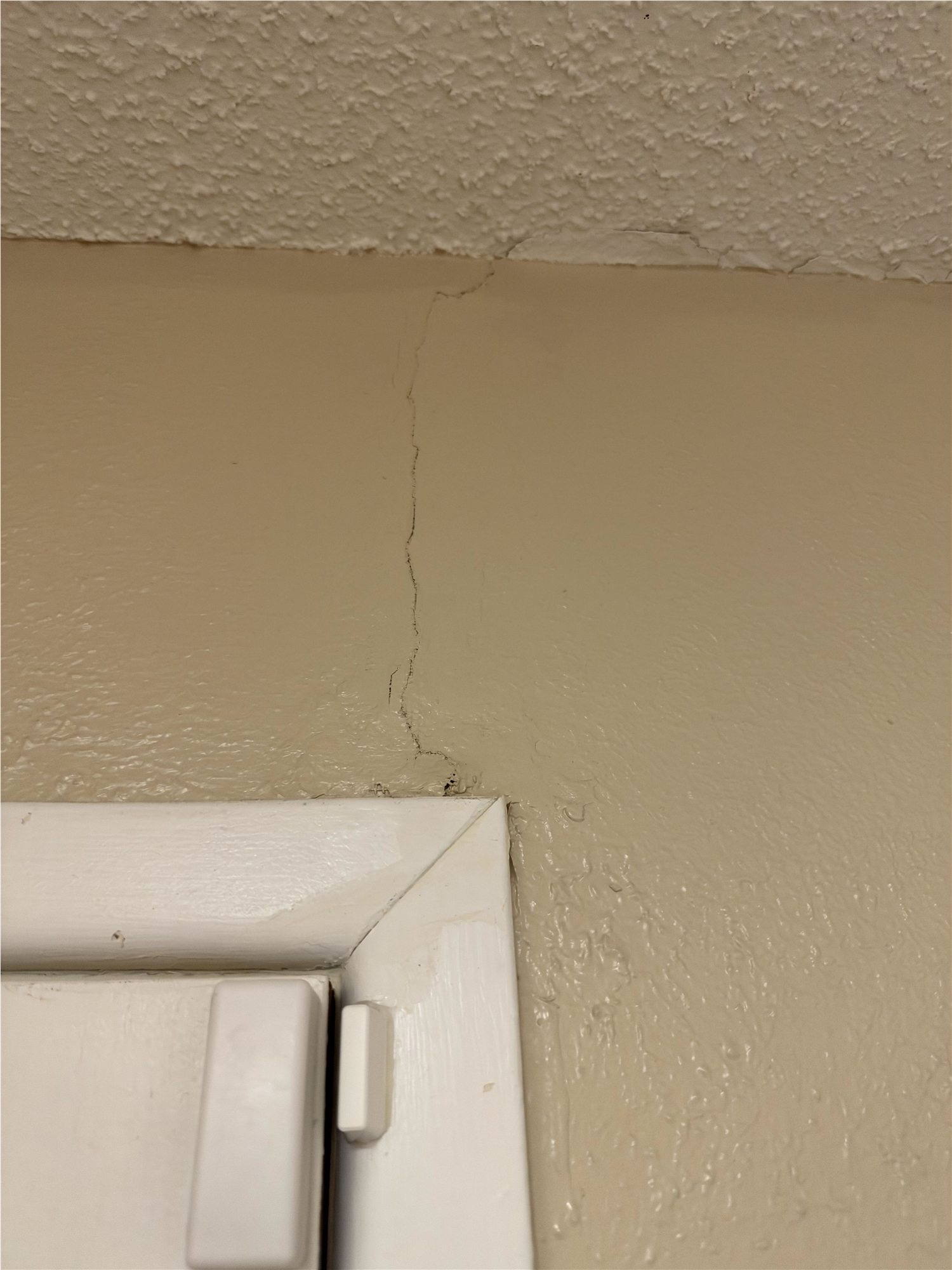
The crack in this photo runs from the ceiling line down to the top of the door trim. Because it is narrow, it could be a finish crack along a drywall joint. The paint and texture around it also make the exact width difficult to judge from the picture alone.
What would we ask next? Does the door still latch? Is the gap around the door even? Has the crack been patched before and come back? Are there similar cracks in the room?
If the crack has looked the same for years and the door works normally, watching it may be all that is needed. If it is getting longer, reopening, or showing up with a door that suddenly rubs the frame, it is worth looking beyond the drywall.
Photo 2: A Vertical Crack in the Concrete Foundation
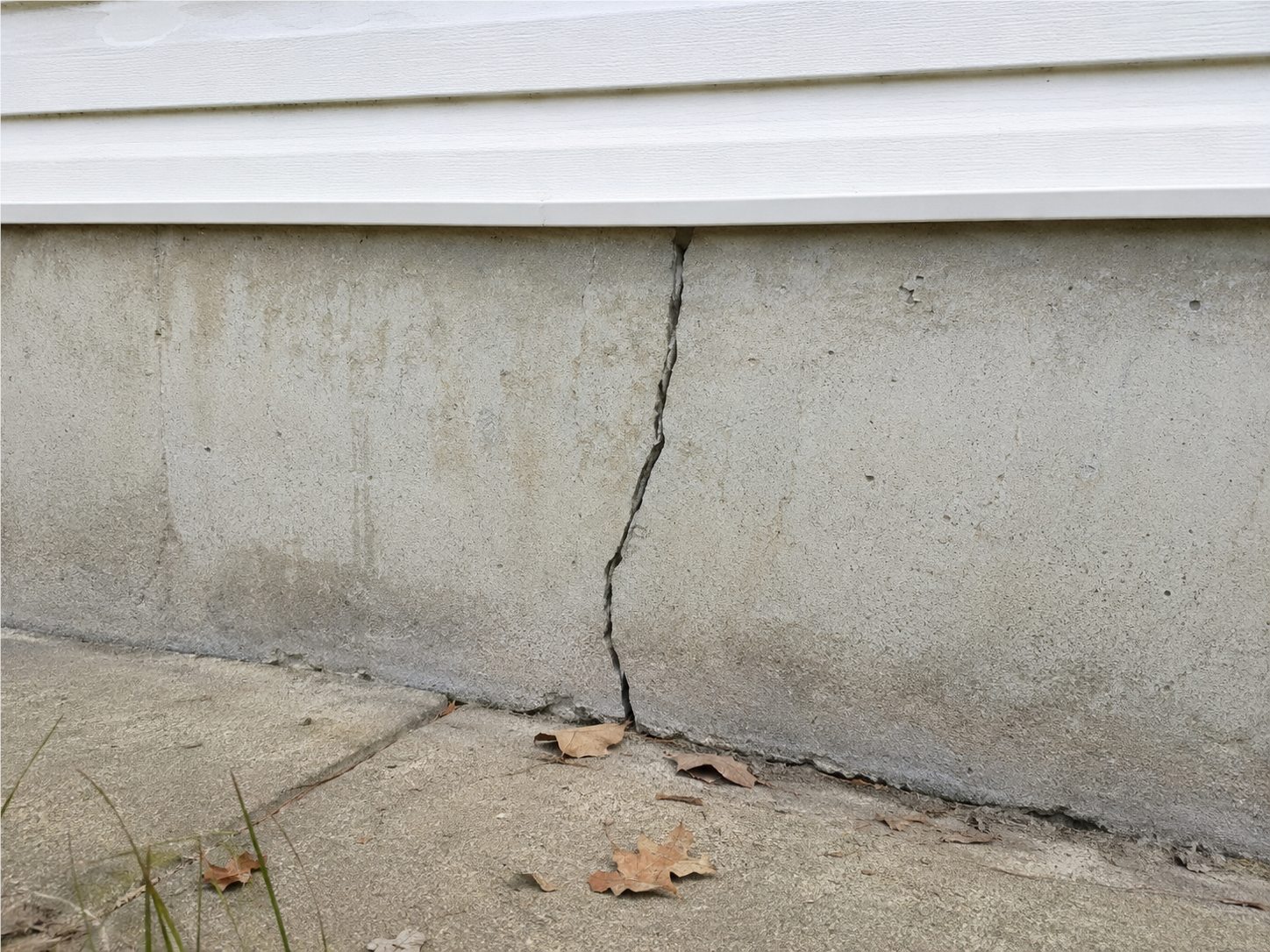
This crack is visible in the exposed foundation between the siding and the ground. Vertical cracks are common in poured concrete, and some form as the concrete cures and shrinks. The fact that a crack is vertical does not tell us everything, though.
We would want to know:
- Whether it is wider at the top or bottom
- Whether the two sides are still in the same plane
- Whether water or white mineral deposits show up inside
- Whether the crack continues below grade
- Whether it has changed since the homeowner first noticed it
A narrow crack that has stayed put may only need monitoring or sealing. A widening crack, one with visible displacement, or one that leaks should be evaluated. It also becomes more meaningful if it lines up with a drywall crack, a sticking opening, or an uneven floor above.
If you also see floor cracking, compare the symptoms with our guide to basement floor crack types and causes.
Photo 3: Brick Movement Near a Basement Window
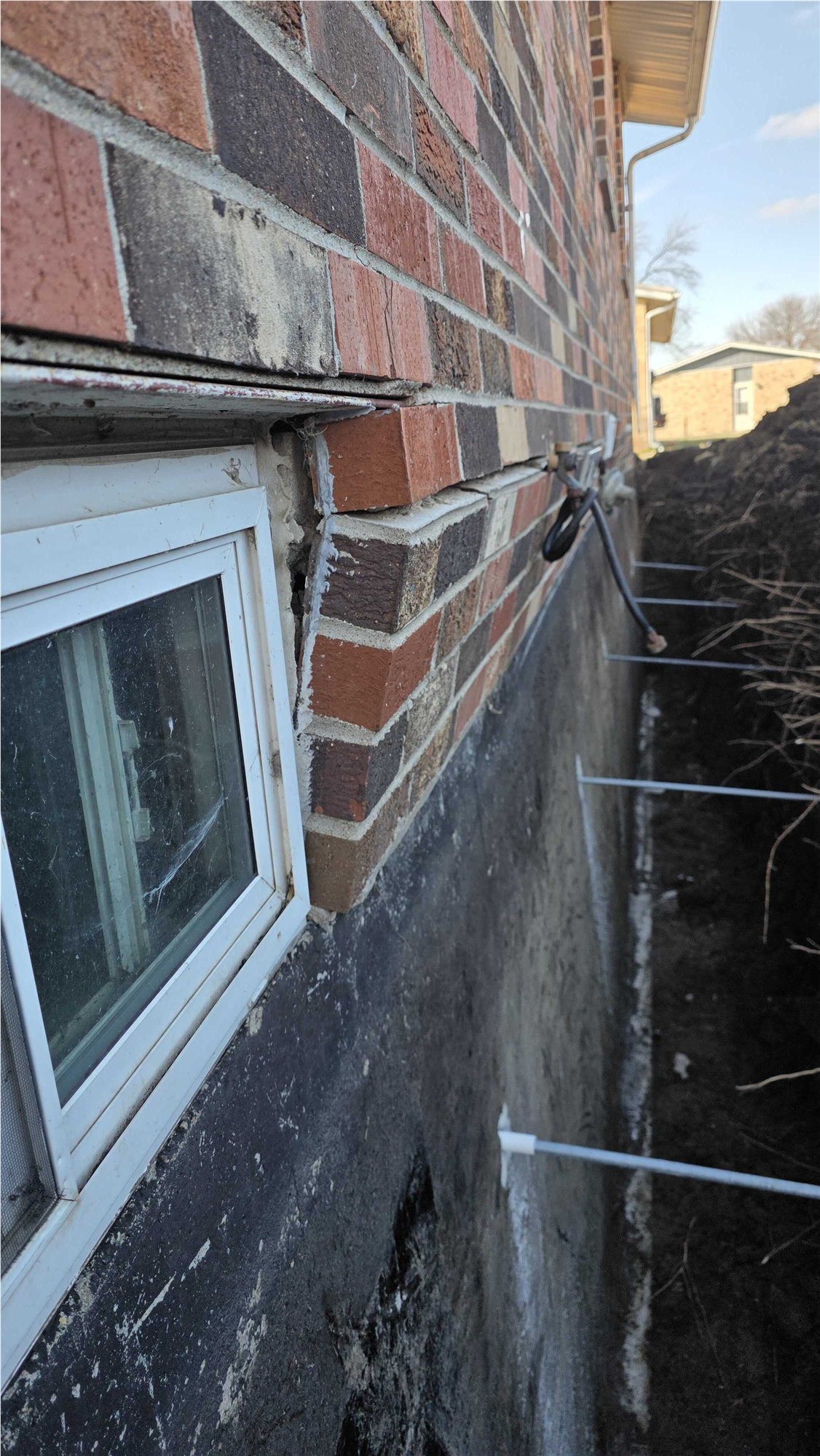
This photo gets our attention for a different reason: the brick near the window does not simply have a hairline mark in the mortar. There is visible separation and some of the masonry appears offset around the opening.
Brick veneer and the structure behind it can move differently, so a picture cannot confirm the cause. Even so, this is the kind of pattern we would want to see in person before someone repoints the mortar or fills the gap with caulk.
We would check whether the window is still square, whether the cracking follows a stair-step path through the mortar, and whether there is a matching crack on the interior. We would also look lower, at the foundation supporting this part of the wall.
What Matters More Than the Crack by Itself
Homeowners understandably focus on the crack they can see. During an inspection, we are also looking at what is happening around it.
A hairline crack above a door means one thing when the door works perfectly and the rest of the room looks normal. It means something different when the same door will not latch, the floor slopes toward it, and there is a crack in the exterior masonry below.
These combinations are especially useful:
- A diagonal drywall crack and a door or window that has gone out of square
- An interior crack and exterior brick movement in the same area
- A foundation crack and water staining or dampness inside
- A repaired crack that keeps returning and new cracks appearing nearby
- Stair-step cracking and visible displacement in the brick or block
Horizontal cracking or bowing in a basement wall belongs in a more urgent category. That pattern can be related to pressure pushing the wall inward and should be inspected promptly.
A Simple Way to Keep an Eye on a Crack
You do not need a special crack monitor to start collecting useful information.
Take a well-lit photo with a ruler or coin in the frame and write down the date. Test the nearby door or window and note whether it rubs, sticks, or has uneven gaps. Then look at the same location from the other side of the wall, if possible.
Check the floor, ceiling, trim, and exterior wall around it. One isolated finish crack is less concerning than several symptoms that line up through the same part of the house.
When you check it again, take the photo from roughly the same distance and angle. That gives you something more reliable than memory. If it changes, keep both pictures; they are useful during an inspection.
When It Is Reasonable to Watch and Wait
Monitoring may be reasonable when all of these are true:
- The crack is hairline and remains unchanged
- There is no visible displacement
- The door or window operates normally
- There is no moisture or staining
- You do not see related cracking inside and outside
Check it again after a season changes or after a stretch of unusually wet or dry weather. If nothing changes, occasional photos are usually enough.
When We Recommend an Inspection
Call a foundation professional when you see one or more of the following:
- The crack is growing, branching, or reopening after repair
- One side is displaced from the other
- Brick or block has shifted, bulged, or cracked through the masonry units
- A door or window suddenly sticks or will not latch
- The floor feels uneven near the opening
- Gaps appear where walls meet ceilings, floors, or trim
- You can see related cracking inside and outside in the same area
- Water enters through a foundation crack
- A basement wall has a horizontal crack or appears to be bowing inward
Our guide to the five warning signs of foundation trouble can help you compare the crack with other symptoms around the home.
Why the Crack May Come Back After You Patch It
There is nothing wrong with repairing a stable drywall crack or replacing failed caulk. The problem is treating an active movement issue as if it were only cosmetic. Drywall compound and fresh mortar cannot stabilize soil or stop part of a foundation from settling.
A professional inspection does not automatically mean a major repair. Sometimes the honest answer is to keep watching the crack. When settlement is active, engineered push piers or helical piers may be used to support the home on stronger soil. If a basement wall is moving inward, the solution may involve wall stabilization. If water is part of the problem, drainage or waterproofing may need to be addressed too.
That is why we look at the foundation, drainage, soil conditions, and the rest of the house before recommending anything. Learn more about foundation settlement and leveling or explore our complete foundation repair services.
Frequently Asked Questions
Does a crack above a door always mean foundation trouble?
No. A drywall seam, normal framing movement, or shrinkage can create a small crack above a door. Pay closer attention if it keeps returning, gets wider, or shows up with a sticking door, uneven floor, or exterior cracking.
Why do cracks start at the corners of doors and windows?
The corners of an opening concentrate stress. If drywall, framing, masonry, or the foundation moves, those corners often show it before the middle of the wall does.
Can I patch a drywall crack and watch it?
Yes, if it is small and stable. Take a photo first so you have a record. If the crack returns or grows, do not keep covering it without checking why it is moving.
Are stair-step cracks in brick serious?
They can be. A fine, old crack that has not changed is different from a new crack with displaced brick or a nearby window that has gone out of square. New or changing stair-step cracks should be inspected.
How often should I check a crack I am monitoring?
Start with a clear dated photo and check it monthly for a few months. It is also smart to look again after snowmelt, heavy rain, or a long dry spell. If it stays the same, seasonal checks are usually enough.
Not Sure What Your Crack Means? We Can Take a Look
Most homeowners are not looking for a sales pitch. They want to know whether the crack is cosmetic, something to monitor, or a sign of a problem that needs to be fixed.
Blackburn Foundation Repair has been answering that question for homeowners across South Dakota, eastern Wyoming, and the Nebraska panhandle since 1992. We will look at the crack in context, explain what we find, and recommend the next step—whether that is monitoring it or repairing the cause.
Schedule a free foundation inspection or call 1-800-392-3389.