

Key Takeaways
- Uneven foundations are more than cosmetic: Sloping floors, sticking doors, and wall cracks are signs of a structural issue that can worsen over time if left unaddressed.
- Multiple proven methods exist for foundation leveling: Push piers, helical piers, and foam injection each serve different situations depending on soil conditions, foundation type, and the severity of settlement.
- Soil conditions in South Dakota make foundation settlement common: Expansive clay soils, freeze-thaw cycles, and fluctuating moisture levels all contribute to foundation movement in our region.
- Acting early prevents larger problems: The longer a settling foundation goes unaddressed, the more extensive the repair work becomes.
When your doors start sticking, floors begin to slope, or cracks appear along your walls, your home may be telling you something important: the foundation is settling unevenly. Foundation leveling is the process of restoring a settled or shifted foundation back to its proper position, and for homeowners across South Dakota, Eastern Wyoming, and the Nebraska panhandle, it is one of the most critical repairs you can make. Contact Blackburn Foundation Repair today to schedule your free foundation inspection and find out exactly what your home needs.
This guide covers everything you need to know about foundation leveling, from warning signs and repair methods to what factors affect the scope of the project and how South Dakota’s unique climate plays a role.
What Is Foundation Leveling?
Foundation leveling is a structural repair process that lifts a home’s foundation back to its original, level position. Over time, the soil beneath a foundation can shift, compress, or wash away, causing sections of the foundation to sink unevenly. This uneven settlement puts stress on the entire structure, leading to cracked walls, misaligned doors and windows, and in severe cases, compromised structural integrity.
The goal of foundation leveling is not just to make floors flat again. It is about restoring the load-bearing capacity of the foundation so your home sits safely and securely on stable ground. For homeowners searching for foundation leveling near me in the South Dakota region, understanding the process is the first step toward protecting your biggest investment.
What Are the Signs Your Home Needs Foundation Leveling?
Recognizing the warning signs early is the best thing you can do for your home. Here are the most common indicators that your foundation has settled unevenly:
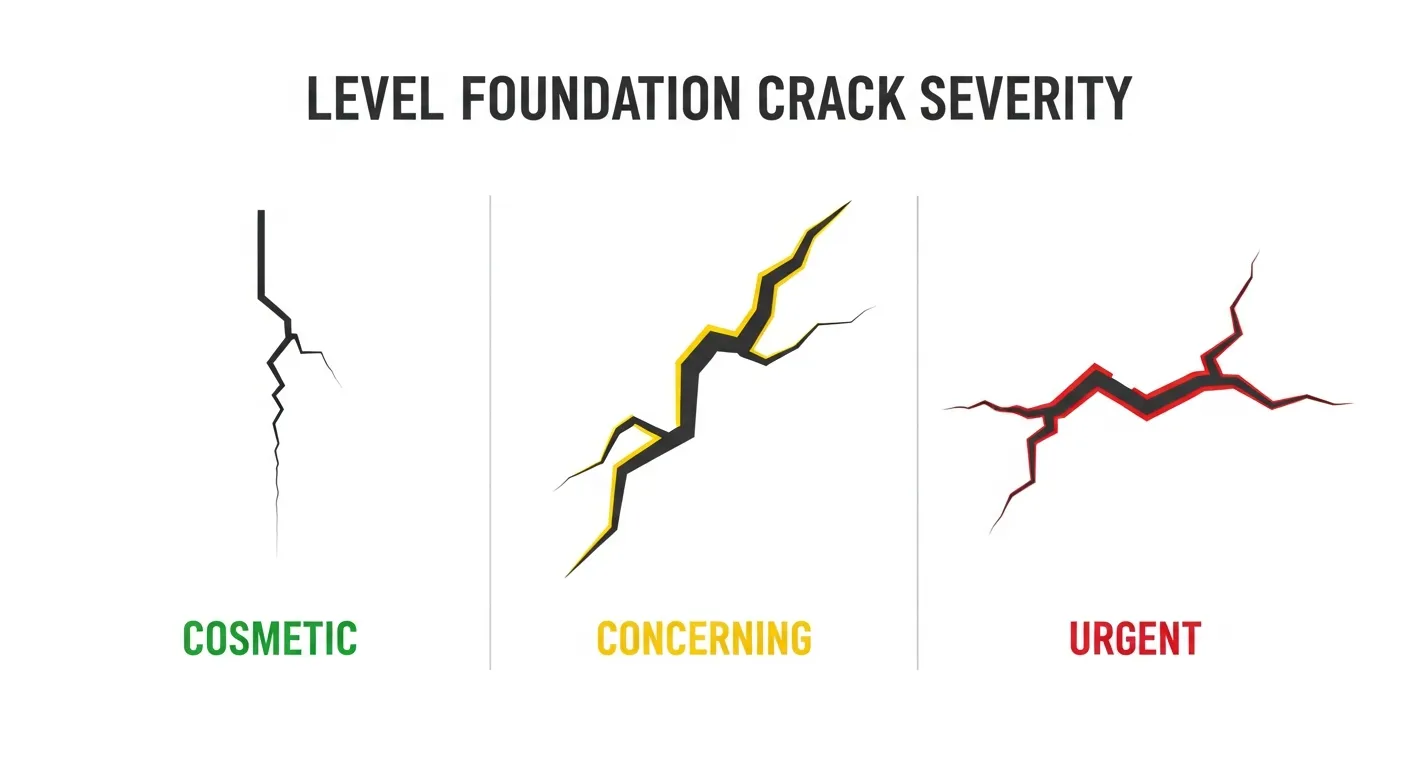
Visible Cracks
- Stair-step cracks in brick or block walls, especially near corners
- Horizontal cracks along basement walls, which may indicate lateral soil pressure
- Diagonal cracks radiating from door and window frames
- Cracks in drywall, particularly above doorways and where walls meet ceilings
Structural Symptoms
- Doors and windows that stick, jam, or will not close properly
- Visible gaps between walls and the ceiling or floor
- Floors that slope or feel uneven when you walk across them
- A chimney that is leaning or pulling away from the house
Water-Related Clues
- Water pooling around the foundation after rain
- Basement moisture or dampness that was not present before
- New cracks in the basement floor where water seeps through
If you notice any combination of these signs, it is worth having a professional inspection to determine whether foundation leveling is needed. Learn more about foundation settlement and what it means for your home.
Why Are South Dakota Homes Especially Vulnerable to Foundation Settlement?
Homeowners in South Dakota face a unique combination of environmental factors that make foundation settlement more common than in many other parts of the country.
Expansive Clay Soils
Much of South Dakota sits on clay-rich soils that expand when wet and shrink when dry. This constant cycle of expansion and contraction puts enormous pressure on foundations, pushing walls inward during wet seasons and allowing the foundation to settle as soil contracts during dry periods.
Freeze-Thaw Cycles
South Dakota winters are harsh. When water in the soil freezes, it expands and pushes against foundation walls. As it thaws, the soil shifts and compresses. Over years and decades, this repeated freeze-thaw cycle gradually moves a foundation out of alignment.
Fluctuating Water Tables
Spring snowmelt and heavy summer storms can dramatically raise the water table, saturating the soil around your foundation. This increased hydrostatic pressure can push against basement walls and erode the soil beneath your footing, accelerating settlement.
Improper Drainage
Homes with inadequate grading, missing gutters, or downspouts that discharge too close to the foundation are at higher risk. Water that is not directed away from the home concentrates in the soil right where it can do the most damage.
What Foundation Leveling Methods Do Professionals Use?
There is no one-size-fits-all approach to foundation leveling. The right method depends on the type of foundation, the severity of the settlement, and the soil conditions at the site. Here are the most common approaches used in the South Dakota region.
Push Piers (Resistance Piers)
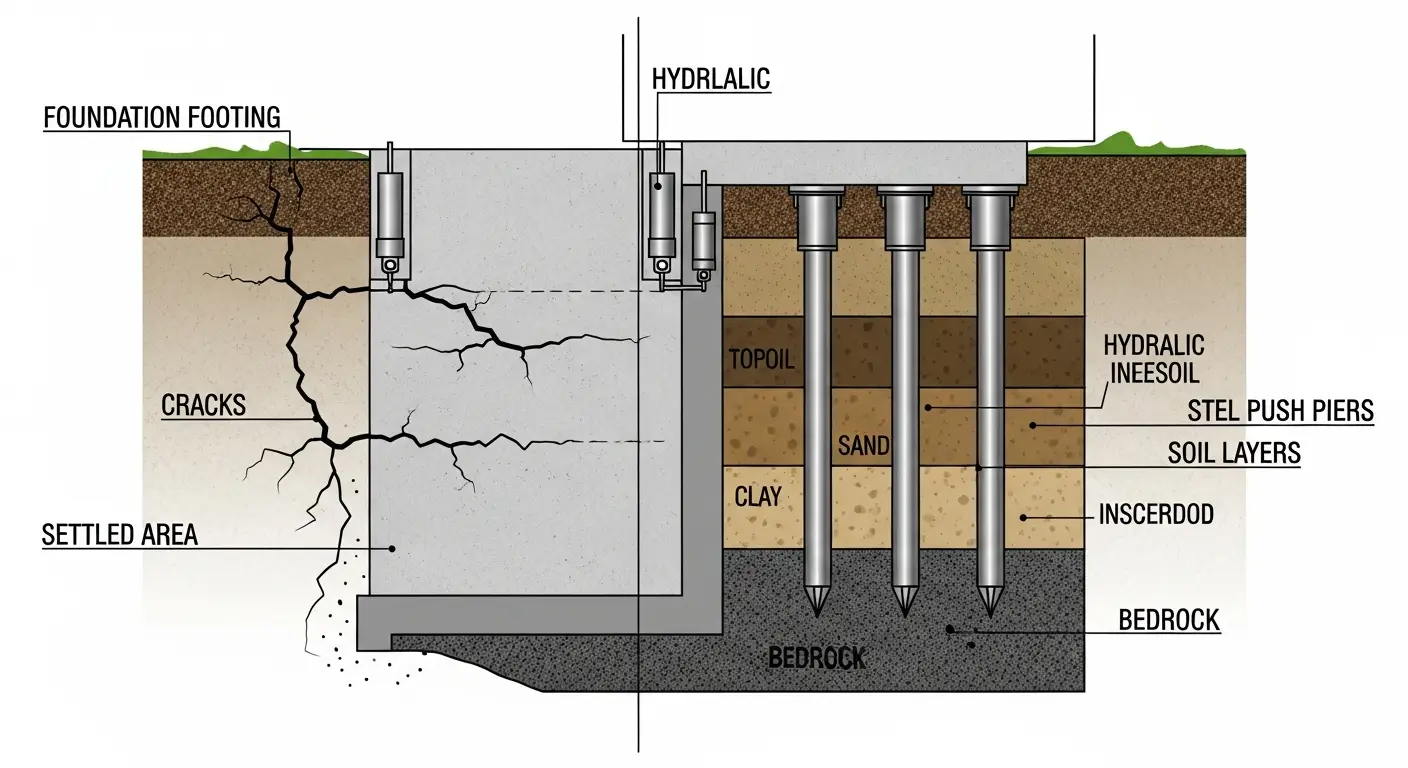
Push piers are steel shafts driven through the foundation footing down to load-bearing bedrock or a stable soil layer deep underground. Hydraulic jacks then use the weight of the home to push the piers to the necessary depth. Once the piers reach stable ground, the foundation is lifted back toward its original position.
Best for: Homes with significant settlement where stable rock or soil exists at depth. Push piers are effective for heavier structures and can often be installed with minimal disruption to the property.
Helical Piers
Helical piers are steel shafts with helical plates welded along their length, resembling large screws. They are mechanically rotated into the ground until they reach a stable soil layer. Once installed, brackets transfer the weight of the foundation onto the piers, and the structure can be lifted.
Best for: Lighter structures, new construction, and situations where the load-bearing soil layer is not deep enough for push piers. Helical piers are also commonly used for foundation wall repair and preventive stabilization.
Polyurethane Foam Injection (PolyLEVEL)
For concrete slabs that have settled, PolyLEVEL foam injection is a modern and minimally invasive option. Small holes are drilled through the slab, and expanding polyurethane foam is injected beneath it. The foam fills voids, compacts loose soil, and lifts the slab back into place as it expands.
Best for: Settled concrete slabs, including garage floors, driveways, sidewalks, and basement floors. It is a fast process with minimal cleanup and cure time.
Wall Anchors and Carbon Fiber Reinforcement
When foundation walls have bowed or shifted inward due to lateral soil pressure, wall anchors or carbon fiber reinforcement strips can stabilize them. While not a leveling method in the traditional sense, wall stabilization is often part of a comprehensive foundation repair project.
Best for: Bowing or leaning basement walls, often in combination with pier installation for complete foundation stabilization.
Not sure which method is right for your home? Schedule a free inspection with Blackburn Foundation Repair and our team will recommend the best approach for your situation.
What Factors Affect a Foundation Leveling Project?
Every home is different, and several factors influence what a foundation leveling project will involve:
Severity of Settlement
A foundation that has settled half an inch requires a very different approach than one that has dropped three inches or more. More severe settlement typically means more piers, deeper installation, and a longer repair timeline.
Foundation Type
Poured concrete, concrete block, stone, and pier-and-beam foundations each respond differently to settlement and require different repair strategies. The age and condition of the existing foundation also matters.
Soil Conditions
The type and stability of the soil beneath your home determines which pier system is appropriate and how deep piers must be driven. A thorough soil analysis is part of any professional foundation inspection.
Home Size and Weight
Larger and heavier homes require more support points. A two-story brick home will need more piers than a single-story wood-frame structure to achieve the same level of stabilization.
Accessibility
How easy it is to access the foundation affects the project scope. Landscaping, decks, porches, and finished basements can add complexity. A professional crew will work to minimize disruption, but access is always a consideration.
Underlying Cause
If the settlement was caused by poor drainage, plumbing leaks, or tree roots, those issues need to be addressed as part of the repair. Simply lifting the foundation without fixing the root cause will lead to repeated problems.
What Should You Expect During a Foundation Leveling Project?
Understanding the process can help put your mind at ease. Here is what a typical foundation leveling project looks like:
- Professional Inspection: A foundation specialist visits your home and conducts a thorough inspection. They check for settlement indicators, measure floor levels, examine cracks, and assess the condition of the foundation from both inside and outside the home.
- Customized Repair Plan: Based on the inspection findings, the specialist designs a repair plan tailored to your home specifying which repair method to use, how many piers or support points are needed, and where they will be placed.
- Installation: On the day of the repair, the crew excavates small areas around the foundation where piers will be installed. The piers are driven or screwed into the ground to reach stable soil. Once all piers are in place, hydraulic equipment carefully lifts the foundation.
- Monitoring and Adjustment: The lifting process is done gradually and carefully to avoid causing additional stress to the structure. The crew monitors the home for movement and makes precise adjustments.
- Cleanup and Follow-Up: Excavated soil is replaced, the work area is cleaned up, and any affected landscaping is restored. Most reputable foundation repair companies also offer a follow-up inspection to ensure the repair is holding.
How Can You Prevent Foundation Settlement?
While you cannot control South Dakota’s soil or weather, there are several steps homeowners can take to reduce the risk of uneven foundation settlement:
- Maintain proper grading so water flows away from the foundation, not toward it
- Keep gutters clean and ensure downspouts extend at least 4-6 feet from the house
- Install a quality sump pump system to manage groundwater, especially if you have a basement
- Water your foundation evenly during extended dry spells to prevent soil shrinkage
- Address plumbing leaks promptly, since water infiltration under the foundation accelerates soil erosion
- Monitor cracks and keep a record of their size over time so you can spot changes early
- Consider crawl space encapsulation if your home has a crawl space, to control moisture from below
Frequently Asked Questions About Foundation Leveling
How long does foundation leveling take?
Most residential foundation leveling projects are completed in one to three days, depending on the number of piers needed and the complexity of the repair. Polyurethane foam injection for concrete slabs is often completed in just a few hours.
Can I stay in my home during foundation leveling?
Yes. Foundation leveling work is done from the exterior of the home in most cases, and the process does not require you to vacate. You may notice some noise and vibration during pier installation, but disruption to daily life is minimal.
How do I know if my foundation problem is serious?
Horizontal cracks, stair-step cracks wider than 1/4 inch, bowing walls, and doors or windows that no longer operate properly are all signs of a potentially serious structural issue. If you notice any of these, a professional inspection is the safest next step. Learn more about the signs of foundation settlement.
Will foundation leveling fix my cracked walls and sticking doors?
In most cases, yes. Once the foundation is stabilized and lifted back toward its original position, many of the secondary symptoms like cracked drywall, sticking doors, and sloping floors improve significantly. Some cosmetic repairs may still be needed after the structural work is complete.
Does foundation leveling come with a warranty?
Reputable foundation repair companies offer warranties on their work. Blackburn Foundation Repair stands behind every project with a transferable warranty, giving you and future homeowners peace of mind.
What if I also have water in my basement?
Foundation settlement and water intrusion often go hand in hand. Cracks caused by settlement can let water in, and excess water can accelerate settlement. A comprehensive approach that addresses both the structural issue and the waterproofing is often the most effective long-term solution.
Protect Your South Dakota Home With Expert Foundation Leveling
Foundation issues rarely fix themselves. If you notice any of the warning signs described above, or if your home is more than 15-20 years old and has never been inspected, it is a good idea to schedule a professional evaluation.
Blackburn Foundation Repair has over 30 years of experience helping homeowners across South Dakota, Eastern Wyoming, and the Nebraska panhandle protect their homes. From foundation settlement repair to basement waterproofing and crawl space encapsulation, our team has the expertise and equipment to diagnose your foundation issue and deliver a lasting solution.
Contact Blackburn Foundation Repair today to schedule your free foundation inspection. The sooner you act, the simpler and more straightforward the repair will be.